
The question what is booklet often arises among businesses, educators, and event planners seeking effective printed communication tools. Booklets are compact, versatile publications that convey detailed information in an organized, accessible way.
They are widely used in marketing, education, and event communication. Understanding booklet types and uses helps create impactful content that connects with target audiences.
This article covers the meaning, common types, practical uses, and real-world examples to help professionals leverage booklets effectively.
Understanding Booklets: Definition and Meaning
Clarifying the term booklet is essential to appreciate its value across industries. While the concept is simple, applications vary by context and purpose.
What Is a Booklet? Basic Definition
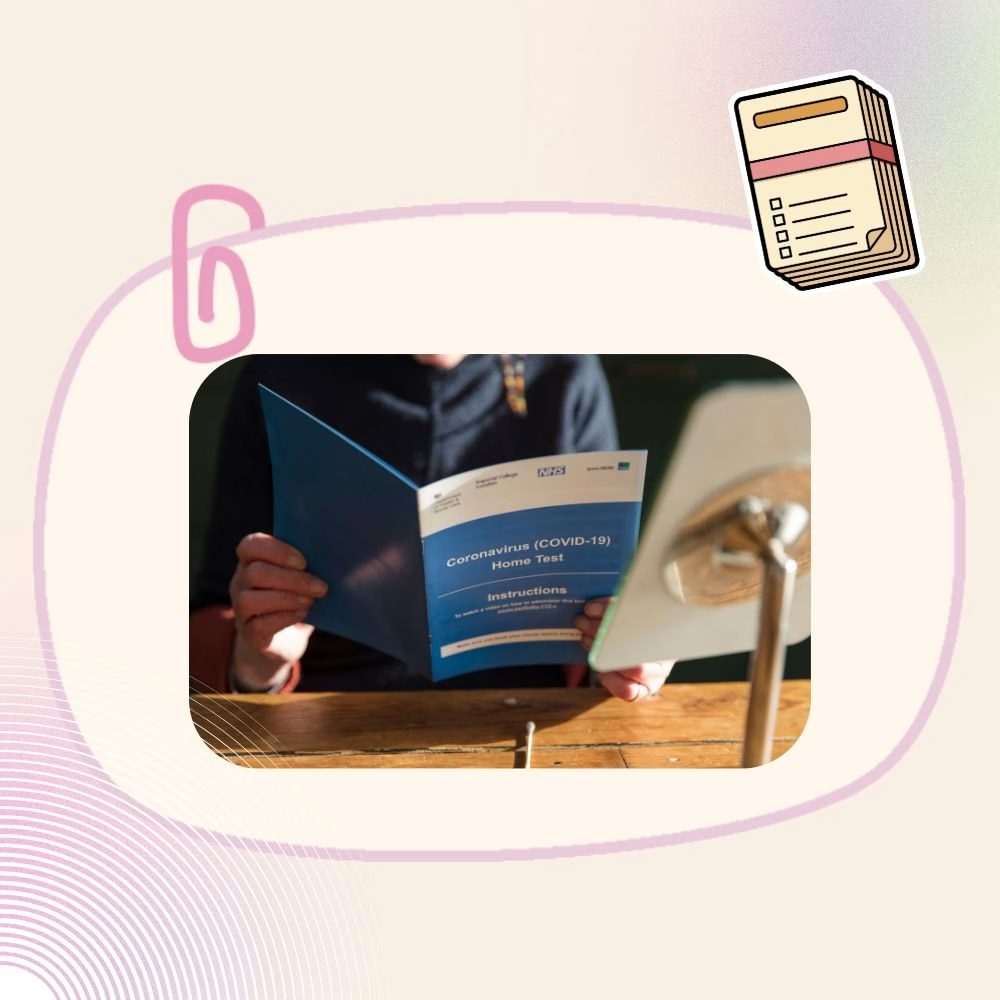
A booklet is a small printed publication with multiple pages bound together, larger than a leaflet but smaller than a full book. It delivers focused, concise content in a navigable format. 80% of marketers consider print materials essential in multichannel strategies, reinforcing booklet importance in integrated marketing campaigns across industries globally.
Unlike brochures or flyers, booklets have more pages, allowing deeper coverage of topics, instructions, or stories. Binding and size differ, but the core purpose is to inform, educate, or promote.
Booklet Meaning in Different Contexts
The term booklet adapts to various fields, each emphasizing aspects to suit communication needs.
- Marketing & Promotions: Booklets serve as product catalogs, promotional tools, or brand storytelling materials, providing detailed information to support buying decisions.
- Educational Materials: They act as study guides, manuals, or course supplements that simplify complex information for learners.
- Event Programs and Guides: Booklets outline event schedules, speaker bios, or venue maps to help attendees navigate smoothly.
This flexibility illustrates booklets’ adaptability across professional environments.
Common Types of Booklets
Booklets come in several formats designed to optimize presentation, usability, and cost. Recognizing these types aids in choosing the right style for your project.
- Folded Leaflet Booklets
Created by folding a large sheet into sections, often tri-fold or bi-fold, these are economical and quick to produce. They suit brief messages or basic guides and are easy to distribute.
- Saddle-Stitched Booklets
Using staples along the fold, saddle-stitched booklets usually range from 8 to 64 pages. Favored for catalogs, magazines, and event programs, they strike a good balance between cost and quality.
- Perfect Bound Booklets
These booklets have glued spines, producing a flat edge like paperback books. Ideal for thicker booklets (over 48 pages), they offer a polished, professional look often used for reports or comprehensive guides.
- Z-Fold and Accordion Booklets
Z-fold and accordion styles create multiple panels unfolding in a zigzag. Effective for step-by-step instructions, maps, or timelines, they combine compactness with expanded content space suitable for interactive storytelling.
- Custom and Specialty Booklet Types
Custom booklets may feature unique sizes, bindings like spiral or wire-o, or die-cut covers. These options help brands stand out through tactile and creative presentations.
Key Uses of Booklets
Booklets support communication goals across industries by delivering structured content.
Marketing & Advertising
Booklets offer a tangible way to present products, services, and brand stories clearly and engagingly.
- Product Catalogs: Detailed lists showcasing features, specs, and pricing to guide customer decisions.
- Brochures and Flyers: Some brochures use booklet formats to present comprehensive promotions.
82% of consumers trust print ads most when making purchasing decisions, highlighting booklets’ credibility in marketing communication effectiveness.
Educational and Instructional Purposes
Booklets simplify complex subjects, enhancing learning retention and accessibility. Print materials require 21% less cognitive effort than digital media, helping learners better understand and retain information presented in booklet formats.
- Study Guides: Summaries focusing on key concepts, exam prep, and revision aid learners at various levels.
- Training Manuals: Stepwise instructions used in corporate or vocational training to build skills.
Corporate and Event Communication
Booklets structure corporate details and event logistics, enhancing stakeholder engagement. 73% of consumers prefer receiving brand communication through direct mail, supporting booklet use in corporate communication and event engagement strategies.
- Annual Reports: Comprehensive company performance overviews for shareholders and partners.
- Conference Programs: Schedules, speaker details, and maps to guide attendees.
Booklet Examples and Case Studies
Examples illustrate how combining design, content, and purpose achieves communication success.
- Effective Marketing Booklet Examples
A luxury skincare brand’s saddle-stitched booklets with rich imagery and ingredient details helped increase sales by 25%. A tech company’s 40-page product catalog improved onboarding and reduced support calls.
- Educational Booklet Samples
A university’s study booklets with summaries, quizzes, and infographics boosted exam pass rates by 15%. Corporate training booklets with workflows and checklists enhanced productivity. 72% of university students report better retention when reading printed materials, supporting booklet use in educational and training environments.
- Innovative Design Examples in Booklets
Accordion-style booklets for storytelling campaigns increased engagement time by 40%. Custom die-cut covers and textured papers added a premium feel, reinforcing brand identity.
- Where to Find or Order Custom Booklets
Services like Vistaprint, Printful, and local print shops provide printing and design options with online customization tools. Design software such as Adobe InDesign or Canva helps create professional layouts.
How to Choose the Right Booklet Type for Your Needs?
Choosing the right booklet type affects effectiveness and budget. Consider function, audience, and production factors.
Consider Your Purpose and Audience
Define if the goal is to inform, persuade, educate, or entertain. Audience and context influence format choice:
- Folded leaflets or saddle-stitched booklets suit brief, accessible info.
- Perfect-bound booklets present detailed content professionally.
- Z-folds or accordion booklets work well for event attendees needing easy navigation.
Printing and Budget Factors
Costs vary by page count, binding, paper, and volume. Saddle-stitched booklets fit moderate lengths and budgets; perfect-bound suits larger runs. Digital printing benefits small runs and variable data, while offset printing fits high-volume quality.
Design Tips for Maximum Impact
Balance visuals and text for readability and engagement. Use consistent branding, clear headings, and quality images. Whitespace aids navigation; place calls-to-action strategically. Infographics and bullet points enhance understanding.
Below is a comparison table of booklet types:
Booklet Type | Typical Page Range | Binding Method | Best Use | Cost Range |
Folded Leaflet | 4–8 panels | Folding only | Quick info, flyers | Low |
Saddle-Stitched | 8–64 pages | Staples along fold | Catalogs, programs | Moderate |
Perfect Bound | 48+ pages | Glued spine | Reports, thick guides | Higher |
Z-Fold / Accordion | Multiple panels | Folding only | Maps, timelines | Low to moderate |
With this knowledge, you can choose and design booklets that enhance your communication goals.
Conclusion
Understanding what is booklet and its uses reveals its role as a versatile printed communication tool. From marketing catalogs to educational guides and event programs, booklets organize and share information effectively.
Recognizing booklet types and applications helps match form with function. Thoughtful design and production choices increase a booklet’s impact, supporting business and educational aims.
Booklets remain valuable, complementing digital strategies by delivering tangible, engaging content to diverse audiences.
FAQs
1. What is the standard size of a booklet?
Common sizes are 5.5″ x 8.5″ (half letter) and 8.5″ x 11″ (letter size), balancing readability and portability. Custom sizes are also popular depending on design goals.
2. How many pages does a typical booklet have?
Booklets usually range from 8 to 64 pages. Folded leaflets have fewer pages (4 to 8 panels), while perfect bound booklets can exceed 100 pages.
3. What is the difference between a brochure and a booklet?
A brochure is typically a single or tri-fold sheet with limited pages for brief promotion. A booklet has multiple bound pages, allowing more detailed and structured content.
4. Can booklets be used effectively for digital distribution?
Yes. Digital booklets in PDF or interactive formats preserve print layout and design while enabling easy online sharing and access.
5. How do I design a professional-looking booklet on a budget?
Use templates from tools like Canva or Adobe Spark, keep page counts low, choose saddle-stitched binding, and select standard sizes and paper to control printing costs without sacrificing quality.