
Even powerful writers commit errors. Typos are missed, sentences sound clumsy, and minor mistakes in grammar silently undermine credibility. That’s where tools for proofreading become valuable allies.
It is not perfect in proofreading. It is all about transparency, precision, and trust. Clean writing, whether it is a blog post, academic paper, email, or marketing copy, alters the perception of the reader of what you are saying.
With modern proofreading tools, catching errors no longer requires a fresh pair of human eyes every time. These tools are time-saving and enhance the quality of writing when properly used.
According to survey data, approximately 42.85% of scholars claimed that AI tools helped decrease writing errors, and approximately 57.76% claimed that the amount of time spent on proofreading decreased.
It is always good to know what proofreading is and what it entails before selecting the appropriate tools.
What Does Proofreading Mean?
Fundamentally, proofreading is the last stage of a written work before it is published or distributed.
The proofreading meaning goes beyond fixing spelling errors. It concentrates on refining the text in order to make it readable and professional.
Proofreading checks for:
- Spelling mistakes
- Spelling mistakes and punctuation mistakes.
- Inconsistent formatting
- Word omissions or repetitions.
- Minor clarity issues
Proofreading does not rearrange and paraphrase ideas like editing does. It refines that which already exists.
Consider proofreading as the final quality inspection of your writing before it gets to the reader.
What Is Proofreading in Writing?
What is proofreading in writing? It is the step that makes your message be conveyed without interruptions. HEPI survey 2025: One in five UK undergraduates who were questioned said they would submit AI-generated text, which points to integrity issues in plagiarism detection and tracking.
Proofreading in writing occurs after drafting and editing. The ideas are already clear. The structure is already set. Friction is just eliminated through proofreading.
For example:
- One typo in a blog post may lower trust.
- A proposal that contains grammatical mistakes can be sloppy.
- Punctuation errors in an academic paper can make it lose its credibility.
This is why proofreading is not an option, but a must among professional writers.
And this is exactly where proofreading tools fit naturally into the writing workflow.
What Are Tools for Proofreading?
Tools for proofreading are software solutions designed to identify and correct language errors automatically.
These tools scan text for:
- Grammar and spelling issues
- Sentence clarity problems
- Overused words
- Inconsistent tone
- Readability concerns
Unlike basic spell checkers, modern proofreading tools analyze context. Most of them operate with the help of AI that enables them to propose improvements rather than merely point out errors.
Independent analysis established that Grammarly was correct in 66 percent of the flagged corrections, and about 7 percent of injected errors were not detected. They do not substitute human judgment, but significantly decrease supervision.
What Are the Essentials of Proofreading?
It is also necessary to know the fundamentals of proofreading before fully depending on tools. Effective proofreading is a combination of focus, technique, and appropriate assistance.
The Fundamentals of Proofreading
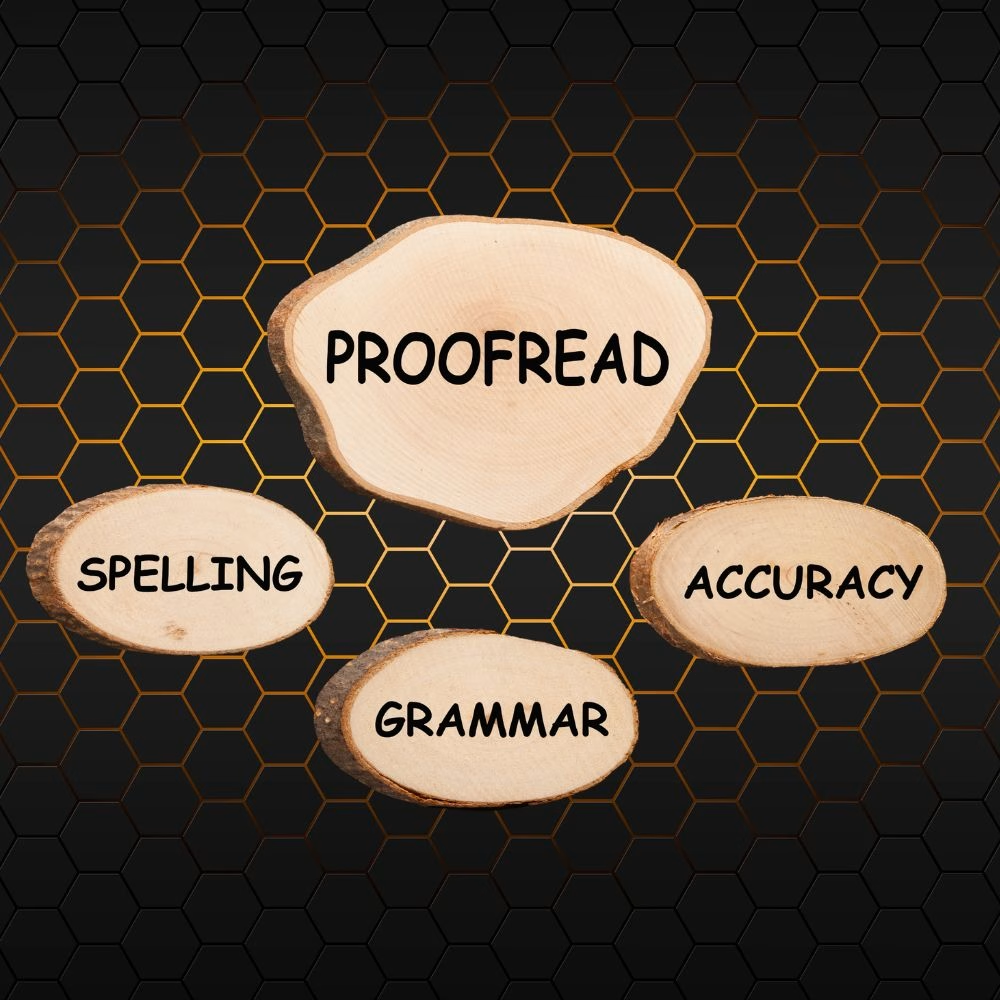
- Accuracy: Proper grammar, spelling, and punctuation.
- Consistency: Tone, tense, and formatting are consistent.
- Clarity: Coherent sentences with no misunderstandings.
- Wholeness: No omissions or unintended terminations.
- Readability: Flowing text.
Proofreading tools help automate these essentials, but knowing what to look for makes them far more effective.
Types of Tools for Proofreading and How They Help?
Not all proofreading tools do the same job. Both categories are concerned with a particular part of writing.
Grammar and Spell Checking Software
These tools catch:
- Spelling errors
- Incorrect verb tenses
- Problems of subject-verb agreement.
- Punctuation mistakes
They are the initial line of defense against clean writing. A systematic review of twelve studies in arXiv found a broad range of grammar-checker detection rates and precision in the range of error types reported.
Style and Readability Tools
Style-focused proofreading tools improve how content feels to read.
They help with:
- Sentence length balance
- Passive vs active voice
- Word repetition
- Complex phrasing
This particularly comes in handy with blogs, marketing text, and web copy.
AI-Powered Proofreading Tools
AI tools do not process individual words but analyze the context.
They can:
- Suggest rewrites
- Improve tone
- Enhance clarity
- Adjust formality levels
These applications are more of writing aids than rudimentary checkers.
Plagiarism-Aware Proofreading Tools
Some proofreading tools also check originality.
They’re helpful for:
- Academic writing
- Professional publishing
Original writing should also be clean writing.
Popular Proofreading Tools Writers Actually Use
There’s no shortage of proofreading tools, but a few stand out because of reliability and usability. Students found grammar tools to be helpful in their grammar skills, and feedback to be easily understood by 68 percent of students and 78 percent of students, respectively.
Grammarly
Grammarly is one of the most widely used proofreading tools. Research determined that Grammarly made 35.5% of spelling mistakes and 10.5% punctuation mistakes in student abstracts, with consistent score improvement.
It excels at:
- Grammar and spelling
- Tone suggestions
- Real-time corrections
- Application and browser integration.
It is user-friendly and can be used in daily writing.
Hemingway Editor
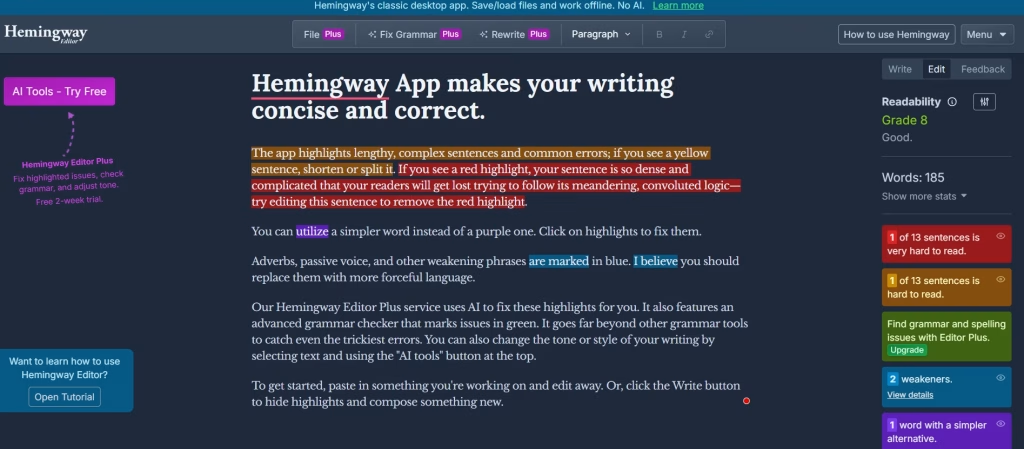
Hemingway dwells on clarity and readability.
It highlights:
- Long sentences
- Passive voice
- Hard-to-read phrases
It is a great tool when the writer desires to write bold and clear prose. Research participants reported 68.42% saw reduced writing errors with AI proofreading tools like Grammarly.
ProWritingAid
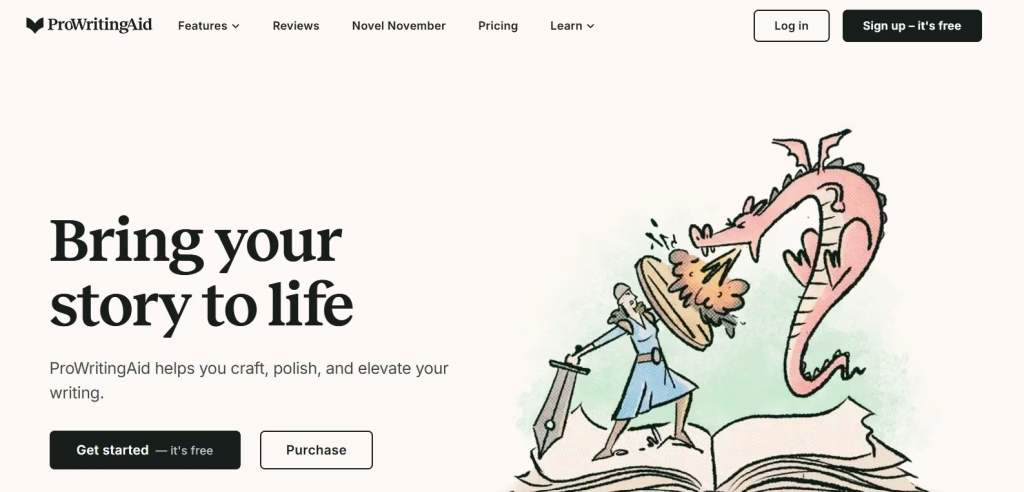
ProWritingAid is well-received by long-form writers.
It offers:
- In-depth style reports
- Consistency checks
- Overused word detection
It is effective, particularly with blogs and books.
LanguageTool
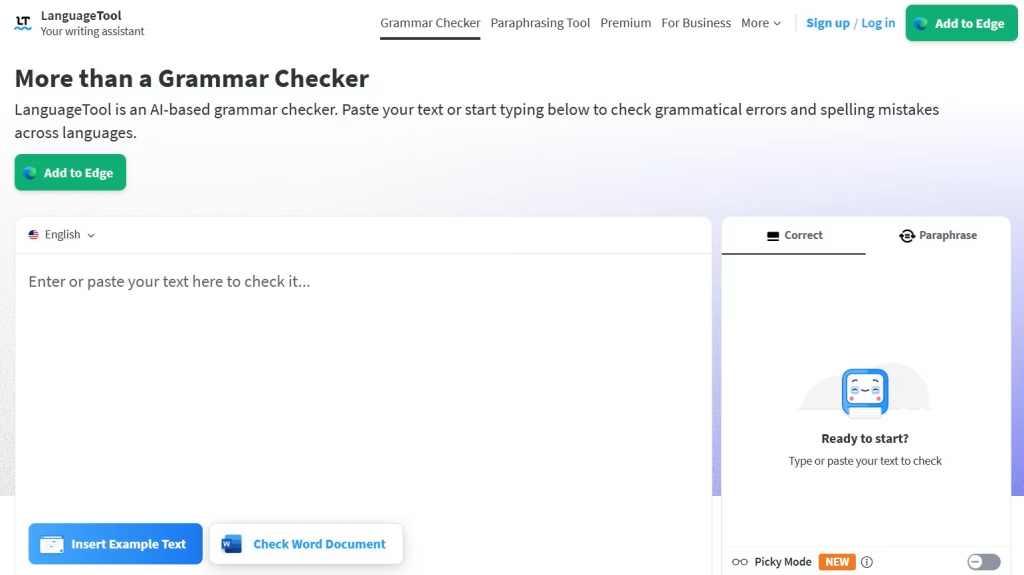
LanguageTool has a variety of languages.
It’s useful for:
- Multilingual writers
- Style and grammar recommendations.
- Business and academic writing.
Each of these tools for proofreading serves a slightly different purpose, and many writers use more than one.
How to Choose the Right Proofreading Tools?
The most effective proofreading tool will be based on the reasons and methods of your writing.
Ask yourself:
- Do you write blogs, scholarly papers, or e-mails?
- Do you require tone suggestions or only error correction?
- Is the budget a concern?
- Is it more than one language that you write in?
Corresponding Tools to Writing Goals
- Bloggers enjoy the advantage of readability and style tools.
- Students require grammar and plagiarism tests.
- Companies require uniformity of tone.
- Writers require in-depth coverage and lengthy examination.
The selection of the appropriate combination saves time and enhances results.
Limitations of Proofreading Tools You Should Know
Even the best tools for proofreading have limits.
They can miss:
- Subtle context errors
- Creative language choices
- Cultural nuance
- Purposely stylistic discontinuities.
An instrument can indicate that something is wrong when it is a conscious decision.
That’s why proofreading tools work best as assistants, not decision-makers.
Even a last human inspection is important.
Best Practices for Using Tools for Proofreading
Using proofreading tools effectively requires a simple process.
Professional Proofreading Process
- Write first and then proofread.
- Process the material using a single tool.
- Consider suggestions carefully.
- Disregard those changes that change your voice.
- Do a final manual read.
The best results are offered by the combination of tools and judgment.
Proofreading Tools for SEO and Online Content
For digital writers, proofreading tools also support SEO.
Clean writing:
- Reduces bounce rates
- Improves dwell time
- Builds reader trust
- Favors the use of clearer keywords.
Content that reads well is rewarded by search engines. Keyword stuffing can be avoided with the help of proofreading.
Conclusion
Good writing does not only concern ideas. It’s about delivery.
Understanding what proofreading truly involves, learning what proofreading in writing is, and applying the essentials of proofreading gives writers a real advantage.
When combined with reliable tools for proofreading, the writing process becomes smoother, faster, and more confident.
FAQs
1. What are the tools for proofreading?
Tools for proofreading are software programs that detect grammar, spelling, punctuation, and clarity errors in writing.
2. What is proofreading’s meaning in simple terms?
Proofreading refers to the process of checking written work to eliminate language errors before release or distribution.
3. What is proofreading in writing?
Proofreading in writing is the final step to polish the text by fixing errors and improving readability.
4. What are the essentials of proofreading?
Accuracy, consistency, clarity, proper grammar, proper punctuation, and smooth flow of the sentence are the essentials.
5. Can proofreading tools replace human proofreading?
Proofreading tools help significantly but cannot fully replace human judgment, context understanding, or creativity.