
Red Bull has a few brands that have rewritten marketing rules. What began as an energy drink turned out to be a lifestyle icon that is known on continents.
This Red Bull case study examines how the brand created enormous awareness without necessarily using conventional advertising. Rather, it emphasized narrative, experiences, and culture. Red Bull sold over 7.9 billion cans worldwide, dominating roughly 38% of the global energy drink market share.
To marketers, entrepreneurs, and students, Red Bull provides a blueprint on how to emerge in the saturated markets without losing brand identity.
Brand Positioning and Target Audience
Red Bull did not position itself as a regular beverage. Since its inception, it has been in line with power, adventure, and ambition.
Its market focus transcends age groups. Red Bull targets individuals who:
- Demand adrenaline and excitement.
- Value performance and focus
- After sports, music, and creative culture.
This was the positioning that enabled Red Bull to sell an emotion rather than a can. The product does not command the conversation but contributes to the lifestyle. Consumers exposed to lifestyle-focused energy drink marketing exhibit 2.3× higher emotional attachment versus product-only messaging in academic research.
That mindset becomes the foundation of the entire Red Bull marketing strategy.
Red Bull Marketing Strategy: Selling a Lifestyle, Not a Product
At the heart of the Red Bull marketing strategy lies a simple idea: attention comes before conversion.
Red Bull does not force anything into people, but it makes moments they desire to watch, share, and recollect. The product fits naturally in such moments.
Key pillars of the Red Bull marketing strategy include:
- Adventure branding and extreme sports.
- Passion point sponsorships.
- Light product-heavy message.
One of the most famous ones is Red Bull Stratos, in which Felix Baumgartner leaped out of space. Millions of people were live viewers, but the drink was hardly mentioned during the event.
That is a tactical restraint, not control.
From Brand to Media Company
Red Bull does not act like a normal FMCG brand. It is more of a global media network.
Red Bull Media House is the producer of:
- High-quality videos
- Documentaries
- Digital magazines
- Social-first content
This shift explains why the Red Bull marketing strategy feels authentic. Viewers do not feel sold to. They feel entertained.
The next shift is the content dominance of Red Bull.
Red Bull Content Marketing Strategy Explained
The Red Bull content marketing strategy focuses on owning attention rather than renting it through ads. 92% of marketers report content marketing drives long-term ROI, with $2.77 return per $1 spent, proving content’s measurable impact.
Red Bull does not interfere with content, but it is the content.
This Red Bull content marketing case study shows how the brand:
- Produces narratives on athletes, creators, and events.
- Gives equal importance to both long-form and short-form.
- Tailors content for each platform.
An Instagram BMX clip does not look like a documentary on YouTube, but both videos are unmistakably Red Bull.
The consistency creates brand recall, but not repetition.
Why Red Bull’s Content Feels Authentic
Participation, rather than observation, is what makes it authentic. Red Bull supports, creates, and takes part in the culture that it sells.
Athletes do not feel sponsored. They feel supported.
This will make Red Bull not experience content fatigue. People do not see the logo presented, but because the content is exciting.
That is the secret behind the content engine of Red Bull.
Red Bull Marketing Campaigns That Changed the Game
Some Red Bull marketing campaigns are studied globally for their scale and creativity.
Notable Red Bull marketing campaign examples include:
- Red Bull Stratos (space jump)
- Red Bull Flugtag
- Red Bull Air Race
- The Academy partners with music.
Every campaign is in line with the DNA of the brand. None feel random or forced.
Red Bull creates moments that are eternal on the internet instead of seasonal promotions.
That long-tail visibility gives Red Bull marketing campaigns unmatched ROI.
Event-Based Marketing as a Growth Engine
Red Bull does not sponsor events. It creates them. 91% of consumers feel more positive about a brand after attending an experiential event, directly increasing loyalty and favorability.
This enables complete branding, narration, and distribution. The events turn into social, digital, and PR channels of content factories.
Each stunt, each race, each concert makes:
- Live engagement
- Post-event content
- Community loyalty
Not many brands incorporate campaigns to the extent of their marketing ecosystem.
Red Bull Marketing Mix: The 4Ps Breakdown
Understanding the Red Bull marketing mix explains how strategy translates into execution.
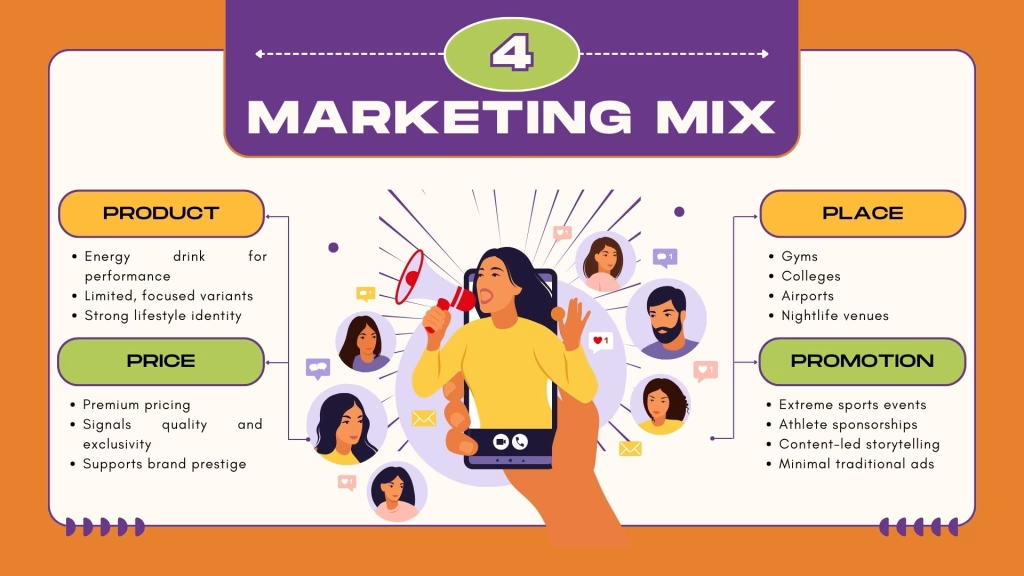
Product
Red Bull does not have endless extensions but product variations. Both products support performance and power.
Price
The brand is based on a high-end pricing strategy. Increased prices strengthen quality, performance, and exclusivity.
Place
Red Bull is available where it is most needed:
- Gyms
- Colleges
- Airports
- Nightlife venues
Promotion
Promotion is based on experiences, content, and sponsorships rather than conventional advertising.
This marketing mix of Red Bull supports its premium and lifestyle positioning perfectly.
Why the Marketing Mix of Red Bull Works?
Each element of the Red Bull marketing mix reinforces the same story. Nothing feels disconnected. 80% of marketers agree live experiences are critical to success, and 77% report improved brand awareness after experiential campaigns.
- The lifestyle is driven by the product.
- The price signals value.
- The place ensures relevance.
- The advertisement creates emotional appeal.
Such alignment does not allow dilution of the brand even on a global level.
Red Bull Marketing Plan: Long-Term Thinking
The Red Bull marketing plan focuses on sustained relevance rather than quick wins.
Rather than following the trends, Red Bull invests in:
- Youth culture
- Emerging sports
- New content platforms
This is a long-term strategy that enables the brand to remain at the lead without the need to reposition frequently.
It also describes the reason why Red Bull does not respond to competitors very often. It leads to its own lane.
Digital Evolution and Platform Adaptation
Red Bull does not alter its content formats but modifies them.
- On TikTok, the content is quick and crude.
- It is cinematic on YouTube.
- It is aspirational on Instagram.
That flexibility strengthens the Red Bull marketing plan without fragmenting the brand’s voice.
Effects and Influence of the Red Bull Marketing Strategy
The Red Bull case study has been successful, as evidenced by the following measurable results:
- Global brand recognition
- Category leadership
- Strong emotional loyalty
Red Bull sells billions of cans every year, but very little of its marketing is about taste or ingredients. 74% of consumers are more likely to purchase after engaging with a branded event experience, boosting conversion from live marketing.
That’s not accidental. It’s strategic clarity.
Challenges and Criticism
Despite its success, Red Bull has challenges:
- Market saturation
- Rising health awareness
- Functional beverage competition.
Nonetheless, Red Bull has a well-built brand of equity, which leaves it with space to change without panicking.
The brand modifies without much noise and remains authentic to itself.
Key Takeaways from the Red Bull Case Study
The Red Bull case study provides some important lessons to the contemporary marketer:
- Attention beats persuasion
- Culture builds loyalty
- The most effective content is the one that is entertaining.
Red Bull demonstrates that the best way to market is not to market.
Lessons Businesses Can Learn from Red Bull
The brands do not require the budget of Red Bull to implement their principles.
Start by:
- Knowing what your audience loves.
- Producing value first and requesting attention second.
- Bringing all campaigns to the brand identity.
Complexity is slower to compound than consistency.
Conclusion
Red Bull failed by screaming louder. It won by meaning more.
This Red Bull case study emphasizes how an intensive marketing strategy, effective content marketing, and a unified marketing mix can create a brand that is beyond products.
Red Bull has one of the best playbooks to be adopted by businesses that want to be unique.
FAQs
1. What makes the Red Bull marketing strategy unique?
Red Bull is also concentrated on lifestyle narration, extreme sports, and content creation, which creates emotional ties rather than product-oriented conventional advertising.
2. What is the effectiveness of content marketing by Red Bull?
Red Bull creates premium sports, music, and culture content, and it is a media brand, but its products are integrated organically.
3. What are the most successful Red Bull marketing campaigns?
Some of the iconic campaigns are Red Bull Stratos, Flugtag, Air Race, and global athlete sponsorships, which produce enormous organic reach.
4. What is the marketing mix of Red Bull?
The marketing mix of Red Bull comprises high-quality products, high prices, strategic distribution, and event, content, and sponsorship-based promotions.
5. What is the Red Bull case study significant to the marketer?
The Red Bull case study reveals how branding, experiential marketing, and content-based approaches create a long-term brand authority on the international level.