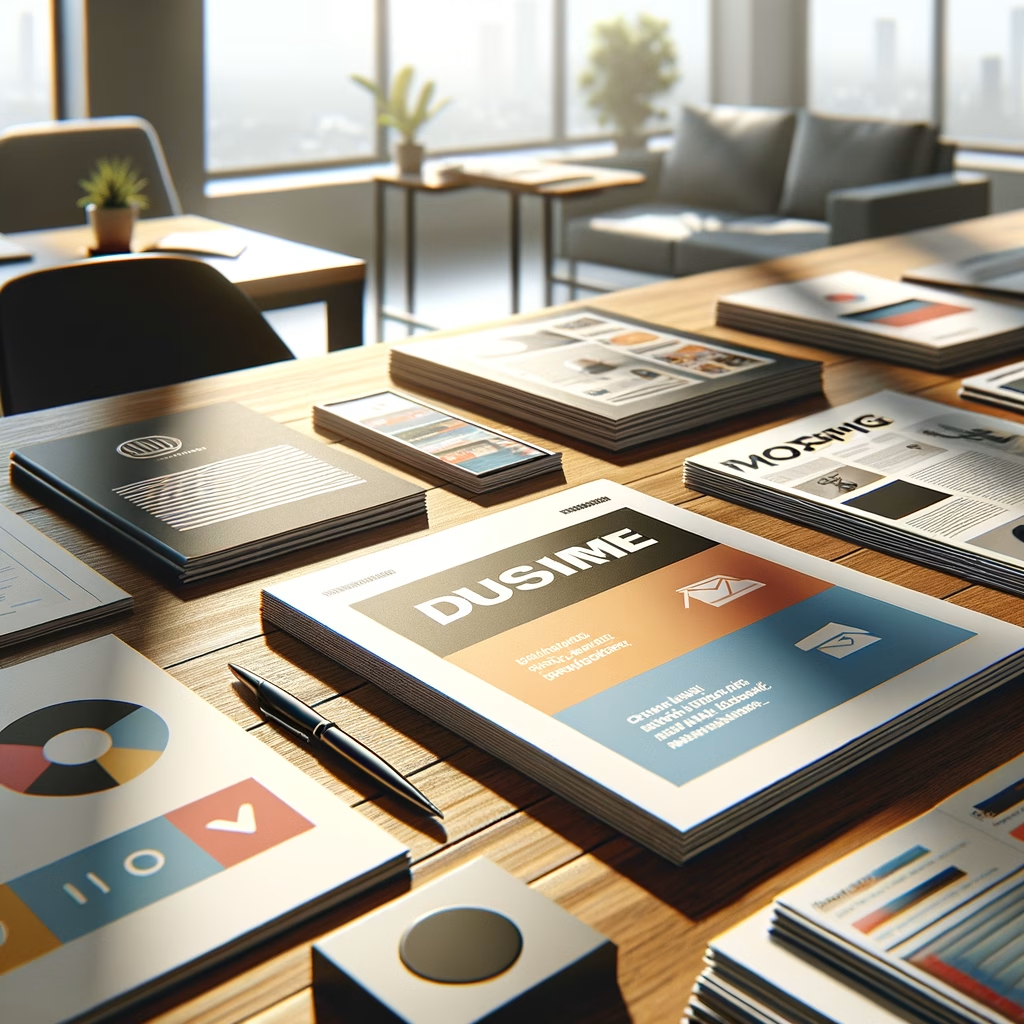

Understanding the differences in leaflet vs pamphlet vs brochure is essential for any successful marketing strategy. Each print material serves distinct purposes and appeals to different audience needs.
Despite the growth of digital marketing, print materials maintain a valuable role in engaging customers directly and providing tangible brand impressions. Choosing the right format can improve message clarity and campaign success.
This article explores the unique features, benefits, and best uses of leaflets, pamphlets, and brochures to help you make informed marketing choices.
Understanding the Basics: Definitions and Characteristics
Before comparing leaflets, pamphlets, and brochures, it’s important to grasp their core definitions and features. This foundation clarifies their distinct roles in marketing.
What is a Leaflet?
A leaflet is a single sheet printed on one or both sides, designed for brief, clear communication. Commonly used for mass distribution, leaflets are cost-effective and easy to produce. Leaflets were found suitable mainly for simple notices and wide reach communication, rather than deep learning or behavior change outcomes.
- Common formats and sizes: A5 (148 x 210 mm), A6 (105 x 148 mm), or DL size (99 x 210 mm) are popular leaflet sizes.
- Typical content and design style: Brief messages, event announcements, sales promotions, and calls to action, often with bold visuals and minimal text.
- Production cost and distribution methods: Leaflets are inexpensive to print in large quantities, ideal for handouts, direct mail, or placement in public spaces.
What is a Pamphlet?
Pamphlets are more detailed than leaflets and are usually folded to create multiple panels. They focus on educational or informational content for audiences needing deeper insight. Printed informational materials like pamphlets showed statistically significant improvements in knowledge when actively read and applied in professional settings.
- Distinctive features and formats: Typically bi-fold or tri-fold, offering 4 to 6 panels for extended, organized information.
- Content depth and informational focus: Pamphlets present detailed explanations, instructions, or advocacy content, balancing text and visuals for clarity.
- Common use cases and audience targeting: Often used by nonprofits, healthcare providers, and educational institutions to inform and persuade.
What is a Brochure?
Brochures are premium-quality print materials designed to showcase brands, products, or services with a professional and polished appearance. They blend rich content with sophisticated design.
A tourism marketing study found brochures influenced decision-making among 2,400 respondents, significantly impacting travel choices and spending behavior.
- Formats (bi-fold, tri-fold, z-fold, booklet): Brochures range from simple tri-folds to multi-page booklets, customizable to marketing goals.
- Design sophistication and content richness: High-resolution images, detailed descriptions, and consistent branding define brochures, emphasizing engagement.
- Role in branding and customer engagement: Brochures build credibility, highlight value propositions, and encourage deeper customer interaction.
With these basics in mind, the next section compares their features side by side for clearer decision-making.
Leaflet vs Pamphlet vs Brochure: Key Differences
Comparing leaflet vs pamphlet vs brochure involves examining format, content, design, cost, and target audience to determine which best suits various marketing needs. Research shows brochures influence effectiveness through multiple factors, with model analysis explaining 17% of variation (R² = 0.17) in consumer decisions.
Format and Size Comparison
Physical dimensions and folding styles affect each material’s usability: leaflets are simple single sheets, pamphlets fold into panels, and brochures offer various fold or booklet options.
Content Depth and Purpose
Leaflets deliver short, direct messages for quick consumption. Pamphlets provide more comprehensive information, while brochures combine depth with visual appeal for brand storytelling.
Design Complexity and Visual Appeal
Leaflets use straightforward designs focused on impact, pamphlets balance text and visuals, and brochures feature professional layouts with high-quality graphics.
Printing and Distribution Costs
Leaflets are the most economical, ideal for large-volume distribution. Pamphlets have moderate costs due to folding and content volume, and brochures are the costliest, reflecting premium materials and design.
Target Audience and Usage Scenarios
Leaflets reach broad audiences for awareness, pamphlets serve niche groups needing education, and brochures attract customers ready for deeper engagement or purchasing decisions.
Feature | Leaflet | Pamphlet | Brochure |
Format | Single sheet, no folds | Folded (bi-fold or tri-fold) | Multi-fold or booklet |
Size | Small to medium (A5, A6, DL) | Medium, multiple panels | Varies widely, often larger |
Content Depth | Brief, direct messages | Moderate detail, educational | Detailed, rich content |
Design | Simple, bold | Balanced text/visuals | High-quality, polished |
Cost | Low | Moderate | High |
Best Use | Mass distribution, quick info | Informative campaigns | Branding, detailed presentations |
Understanding these differences helps you select the right material based on your marketing objectives.
Choosing the Right Material for Your Marketing Goals
Selecting among leaflets, pamphlets, and brochures depends on your campaign’s goals, audience, and budget. Each serves a strategic purpose when matched correctly.
When to Use a Leaflet
Leaflets work well for campaigns needing a broad reach and quick communication. Their simplicity supports rapid message delivery without overwhelming the audience.
- Best for: mass distribution, event promotion, quick messages
- Advantages: low cost, easy production, highly distributable
- Limitations: limited space, less detailed engagement
When to Use a Pamphlet
Pamphlets suit situations where audiences need more in-depth information without the formality or cost of a brochure. They effectively balance text and visuals.
- Best for: educational campaigns, detailed information, nonprofit causes
- Advantages: moderate cost, informative, accessible format
- Limitations: may be overlooked if too text-heavy
When to Use a Brochure
Brochures are ideal for high-impact branding and detailed product or service presentations. They convey professionalism and help build trust with potential customers.
- Best for: impactful branding, detailed presentations
- Advantages: premium feel, versatile formats, deep engagement
- Limitations: higher production costs, longer design time
After selecting the right material, effective design is key to maximizing impact.
Design Tips and Best Practices for Effective Print Marketing
Design quality affects how your print materials are perceived and whether they capture attention and prompt action. Content analysis of promotional brochures revealed 75% of underlying studies were considered valid, supporting credibility when evidence-based content is used.
- Visual Hierarchy and Readability
Arrange content to guide the reader’s eye naturally from headline to call to action. Use contrasting fonts and sizes to highlight key messages, ensuring readability at a glance.
- Call to Action (CTA) Placement Strategies
Position CTAs prominently, ideally on front or back panels of leaflets and pamphlets, or near the conclusion of brochures. Clear, compelling CTAs improve response rates.
- Material Quality and Print Finishes
Select paper stock and finishes like gloss, matte, or spot UV to align with brand identity and budget. Higher-quality materials often convey greater credibility.
- Incorporating Branding Consistently
Use logos, colors, and typography consistently to reinforce brand recognition and support cohesive messaging across print collateral.
Well-designed print materials not only inform but also enhance brand perception, paving the way for integrated marketing efforts.
Integrating Print Materials with Digital Marketing
Combining print with digital channels amplifies reach and engagement, creating seamless customer experiences. A large-scale advertising dataset analysis across 12,000 newspaper editions and 100 million readers confirms the sustained relevance of print advertising over time.
- Using QR Codes and URLs
Including QR codes and easy-to-remember URL links in offline print materials with online resources, enabling instant access to further content or offers.
- Tracking Engagement with Print Collateral
Unique promo codes, QR scans, and personalized URLs help marketers measure print campaign effectiveness and refine future efforts with real data.
- Combining Print and Social Media Campaigns
Using print alongside social media encourages multi-channel interaction, building brand loyalty, and expanding audience reach.
Conclusion
- Summary of differences and uses: Leaflets suit quick, wide messaging; pamphlets fit educational content; brochures offer detailed, branded presentations.
- Final recommendations: Choose print materials aligned with your campaign goals, audience, and budget for best results.
- Encouragement to test and optimize: Track responses and adjust formats and designs to continually enhance marketing outcomes.
FAQs
1. What is the main difference between a leaflet and a pamphlet?
A leaflet is a single-sheet print with brief content for quick messaging, while a pamphlet is folded and provides more detailed information across multiple panels.
2. Can a brochure be used for small-scale marketing campaigns?
Yes, brochures can be tailored for any campaign size but tend to be more cost-effective for targeted or high-value audiences due to production costs.
3. Which print material is more cost-effective for mass distribution?
Leaflets are the most cost-effective for mass distribution as they are simple, single-sheet prints with lower production costs.
4. How do I decide between a bi-fold and tri-fold brochure?
Bi-fold brochures provide larger panels for spacious content, suitable for simple presentations, while tri-folds offer more sections for organized information.
5. Are leaflets still effective in digital-heavy marketing strategies?
Yes, leaflets remain effective by delivering tangible, immediate messages that can drive traffic to digital channels through QR codes or URLs, linking offline and online marketing.