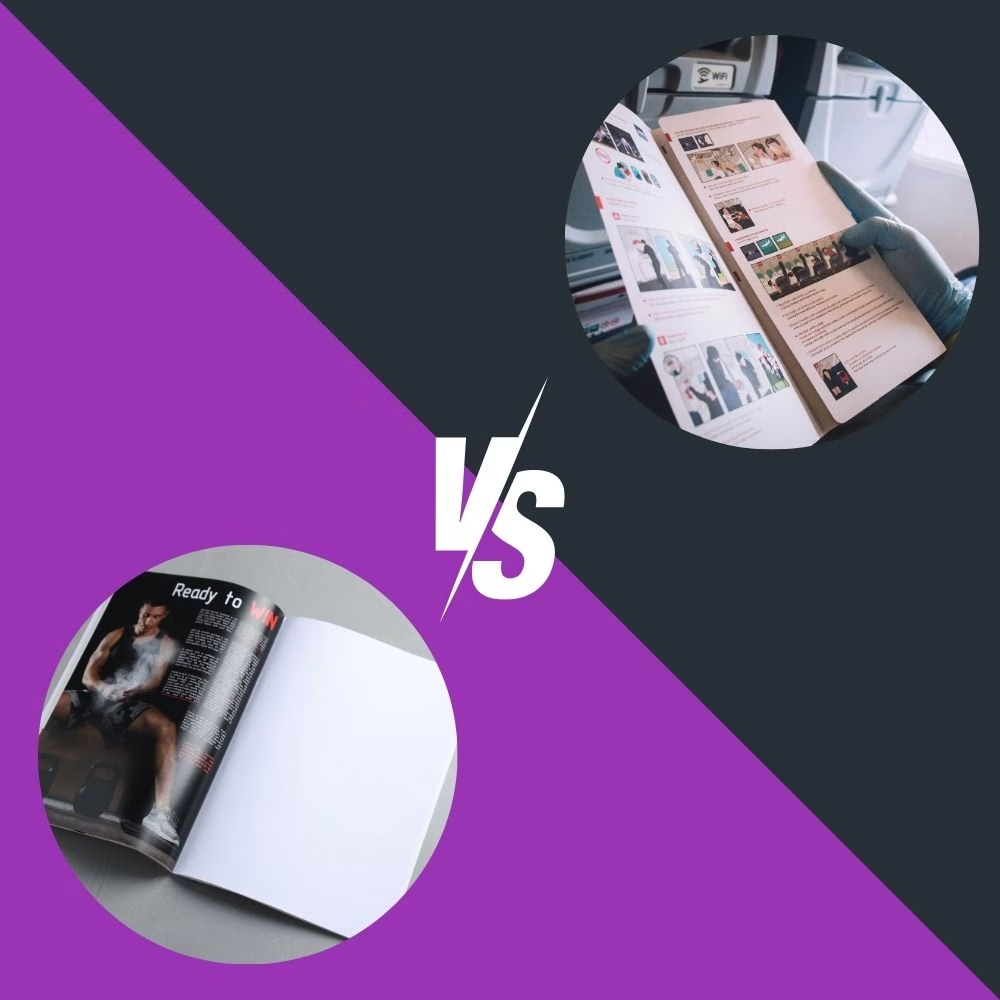

The difference between a booklet and a brochure is subtle but important for creating effective marketing materials. Many businesses face challenges in choosing the right format to convey their message clearly and engage their audience efficiently.
Understanding these differences affects design, printing costs, and communication strategy. This article offers a straightforward comparison to help you select the best option for your promotional needs and maximize your brand’s impact.
By the end, you will understand the main features, typical uses, and production considerations of booklets and brochures to make informed marketing choices.
What Is a Brochure?
A brochure is a compact printed piece designed to introduce a company, product, or service quickly and attractively. It provides concise information to capture attention and encourage actions like purchases or website visits.
Brochures are effective for brief, targeted messaging that generates interest or offers an overview. A global marketing survey found that 80% of consumers read or skim printed brochures/catalogs monthly, showing strong print engagement.
Common Formats and Types
44% of consumers reported making a purchase after receiving a printed marketing piece like a brochure. Brochures come in various folding styles and sizes suited to marketing goals. Popular formats include:
- Bi-fold: A single fold creating two panels for a simple and elegant look.
- Tri-fold: Divides the sheet into three panels, providing more space while staying compact.
- Z-fold: Accordion-style fold for sequential storytelling or segmented content.
- Gate fold and other custom folds: Used for creative impact and premium presentations.
These formats allow flexibility depending on the marketing message and audience.
Typical Use Cases
Brochures are common across industries and scenarios, such as:
- Trade shows and events to inform visitors quickly about products or services.
- Retail promotions highlighting special offers or new arrivals.
- Tourism and hospitality showcase travel packages or amenities.
- Educational institutions providing program overviews or campus info.
They suit distribution in public spaces, mail campaigns, or handouts. A hospitality survey found 79% of visitors pick up brochures at destinations, showing strong use in tourism settings.
Design and Printing Characteristics
Brochures typically use high-quality glossy or matte paper between 80 and 150 gsm, optimized for vibrant images and readable text. Sizes usually range from A4 to A5, balancing portability and content space. Most brochures have 4 to 6 panels with a few pages.
Printing runs vary from small batches to mass production, using digital or offset printing based on volume and budget. Research shows 74% of marketers say print materials are most effective for generating brand awareness.
Brochures emphasize impactful visuals with concise text to engage readers effectively.
What Is a Booklet?
A booklet is a small, multi-page publication designed to provide detailed information in a structured format. It’s used to educate, inform, or offer comprehensive insights, serving as a reference rather than a quick promo.
Booklets are essential for deeper brand storytelling, product catalogs, or instructional materials requiring detailed explanations.
Common Formats and Characteristics
Booklets vary in size, commonly from A5 to A4, and usually contain 8 to 64 pages or more. They are bound by staples (saddle-stitch), perfect binding, or spiral binding for durability and ease of use.
The multi-page layout supports organized sections, indexes, and detailed imagery for complex content delivery.
Typical Use Cases
Booklets are preferred where comprehensive communication is needed, such as:
- Product catalogs with detailed specs and multiple items.
- User manuals provide step-by-step instructions.
- Event programs listing schedules, speakers, and maps.
- Annual reports and corporate portfolios showcase achievements and data.
These uses benefit from the booklet’s ability to present layered information clearly.
Design and Printing Considerations
Booklets typically use heavier paper for covers (150–250 gsm) and lighter paper inside (90–120 gsm) to balance durability and cost. High print quality ensures clear images and readable text throughout.
Binding affects cost and experience, saddle-stitching suits smaller page counts, while perfect binding is better for thicker booklets.
Due to length and quality, booklets have higher printing costs but enhance brand credibility.
Key Differences Between Booklet and Brochure
- Content Length and Depth
The main difference is content volume. Booklets contain extensive, detailed information with multiple sections, while brochures offer concise, impactful messages for quick reading.
This affects communication strategy: brochures generate interest; booklets build deeper understanding. Marketing professionals say 63% believe print has a lower ROI than digital, but 14% say print ROI is higher.
- Format and Structure
Brochures are single sheets folded into up to six panels. Booklets feature multiple bound pages, resembling small books.
Users tend to browse brochures quickly, whereas booklets invite longer reading.
- Purpose and Usage
Brochures focus on awareness and lead generation, ideal for promotions or introductions. Booklets educate or provide reference material, often after initial engagement.
Selection depends on whether the goal is immediate attention or comprehensive insight.
- Design Complexity
Brochures prioritize bold visuals and brief text with simple layouts. Booklets require consistent styling, balanced text and images, and more complex layouts for readability.
This affects design effort and resource use. A study of printed materials found print yields 20% higher brand recall than digital advertising.
- Cost and Production
Brochures are cost-effective due to fewer pages and simpler production. Booklets cost more with additional pages, binding, and premium paper.
Brochures usually have a faster production turnaround.
Aspect | Brochure | Booklet |
Content Length | Short, summary-focused | Detailed, multi-page |
Format | Single sheet folded | Multiple bound pages |
Purpose | Awareness and promotion | Education and detailed info |
Design Complexity | Simple, bold visuals | Complex layouts and styling |
Production Cost | Lower cost, faster turnaround | Higher cost, longer print times |
How to Choose Between a Brochure and a Booklet
75% of consumers find direct mail easier to read than online content, showing print ease of use.
Assessing Your Marketing Objectives
Define your communication goals first. For quick interest or brand introduction, brochures work well. For detailed explanations or educational content, booklets are better.
Matching format to objective improves message effectiveness and engagement.
Budget Considerations
Consider your budget relative to campaign scale. Brochures fit tighter budgets; booklets require more investment but can offer greater value.
Evaluate long-term returns against upfront costs.
Printing and Distribution Volume
Decide on your distribution size. Brochures suit large-volume, low-cost printing for mass marketing. Booklets target smaller runs where quality and detail matter more.
Distribution channels like mail, events, or retail points may affect format choice.
Design and Content Planning
Assess if your content fits within a brochure’s limited space or requires a booklet’s extended layout. Collaborate with designers to ensure smooth content flow and reader engagement.
Good planning prevents costly redesigns and enhances communication impact.
Popular Printing Services for Booklets and Brochures
- Service 1: Printify
Printify offers fast turnaround and competitive pricing for both brochures and booklets. Their online platform supports easy customization and order tracking, suitable for small to medium print volumes. They provide variable sizes, folding options, and eco-friendly papers.
- Service 2: Vistaprint
Vistaprint is popular for versatile printing solutions, offering various brochure types, including tri-fold and bi-fold, alongside saddle-stitched booklets with customizable pages. Their design tools help streamline layouts for effective marketing.
- Service 3: UPrinting
UPrinting specializes in high-quality, customizable printing with bulk discounts for brochures and booklets. They use advanced technology for sharp images and rich colors, offering premium binding and paper options for brands focusing on presentation.
Conclusion
The difference between booklet and brochure centers on content depth, format, and purpose. Brochures are suited for brief, attention-grabbing communication, while booklets support detailed, structured information.
Selecting the right format depends on your marketing goals, budget, and distribution plans. Understanding these factors helps create impactful materials that enhance brand messaging and engage customers effectively.
FAQs