
A brochure is able to provide the reader with all the information needed in a short, eye-catching format. Whether you are making marketing material for a business, a school project, or a company event, knowing how to write a brochure helps you speak clearly and make a strong impression.
This guide explains what a brochure is, how it works, the different formats you can choose, and how to make a brochure on paper or online. Every section has practical tips, examples, and friendly explanations to simplify the process.
What Is a Brochure?
A brochure definition is a folded printed material that shares information about a product, service, event, or organization. It is a combination of brief writing and powerful pictures, which makes it excellent in marketing and education.
Brochures do not have long booklets or complicated catalogs since the content is short, structured, and simple to read. Businesses use them to do promotions, students to do projects, and organizations to create awareness.
A 2016 survey of retail outlets revealed that the effect of promotional brochures on sales was significant and positive in most of the stores in Pakistan.
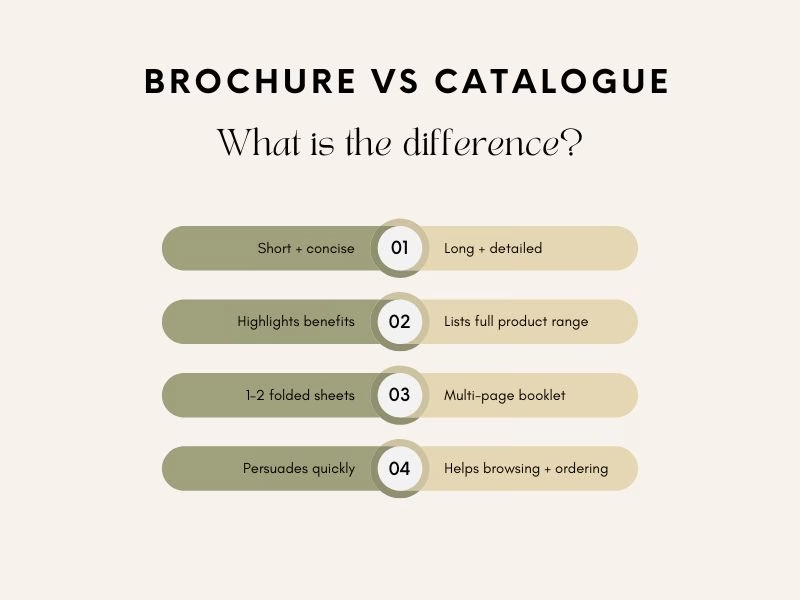
Brochure vs Catalogue – Are They the Same?
No, there is a difference between a brochure and a catalogue. A survey conducted recently has revealed that 80 percent of consumers will read or at least skim print brochures or catalogs every month, indicating that print marketing continues to reach individuals.
Brochure
- Short
- Shows highlights
- Formed to convince within a short time
- Usually 1-2 folded sheets
Catalogue
- Long and detailed
- Enlists numerous products or services
- Often many pages
- Browsing or ordering
A brochure establishes interest; a catalogue provides complete product descriptions.
How Many Types of Brochures Are There?
There are several types of brochures, and picking the right one depends on your message and design style.
Popular Types of Brochures
- Bi-fold – One-fold, two panels on each side; clean and simple.
- Tri-Fold – Three panels; the most versatile.
- Z-Fold – Accordion; very popular in telling stories.
- Gate-Fold – Opens dramatically; it is employed in luxury branding.
- Roll-Fold – Several panels that roll up; suitable for step-by-step content.
- Booklet Brochure – Multi-page mini-book; utilized in elaborate material.
Both types alter the way your story is presented and the way the readers navigate the information. A field study of 2,400 travel-information seekers revealed that brochures have a great impact on decision-making, expenditures, and on-site visits.
What Is Brochure Format?
A brochure format is considered to be the layout, the number of folds, and the arrangement of the content. Readability and design flow are determined by the format.
Typical Brochure Formats
- Bi-fold (8.5 x 11 inches)
- Tri-fold (8.5 x 11 inches)
- Half-fold
- Z-fold
- Digital or corporate custom sizes
The first step is to choose a format so that you can plan how to write.
What Should Be Included in a Brochure?
A good brochure contains the necessary items that will not overwhelm the reader.
Must-Include Elements
- Clear headline
- Short introduction
- Benefits or highlights
- Images or infographics
- Key points or features
- Contact details
- Call-to-action (CTA)
The readers do not need to search to find information; your layout must guide the readers from one idea to another.
How to Write a Brochure Content?
Learning how to write a brochure starts with clarity. A brochure is not supposed to be lengthy and complex. It is powerful because it has crisp messages in a simple-to-read format.
Step 1: Know Your Reader
Ask:
- Who is this brochure for?
- What do they care about?
- What is the choice you would like them to make?
Step 2: Outline Before Writing
An outline helps you to be brief.
Outline:
- Headline
- Overview
- Key benefits
- Proof, examples, or visuals
- CTA
- Contact details
Step 3: Compose Brief, Convincing Writing
Keep paragraphs short. Use everyday language. Put emphasis on benefits- what the reader gets.
Example:
Rather than: Our company offers different digital solutions, say:
“We assist companies to expand online using straightforward and efficient online tools.”
Step 4: Add Visual Breaks
- Icons
- Bullet lists
- Photos
- Short boxes or highlights
These assist the reader in navigating the content with ease.
Step 5: End With a Strong CTA
Examples:
- Book a free consultation
- See our site on the web
- Enroll today
- Contact our support team
A CTA informs the reader of the next step to take, and that is the actual aim of a brochure.
How to Write a Good Brochure?
An effective brochure is a combination of writing, design, and psychology.
Tips for Maximum Impact
- Your best message should be at the beginning
- Verbs should be action encouraging
- Keep each part of it to one idea
- Use plain language – readers prefer plain language
- Demonstrate advantages rather than characteristics
- Keep branding consistent
- Divide lengthy text into brief parts
The more the content directs the eye, the better the brochure works.
How to Write a Brochure for Students?
School presentations or creative projects are often written by students in the form of a brochure. It is aimed at making information easy to understand and, at the same time, making it visually attractive.
Student-Friendly Approach
- Begin with a summary of the topic
- Include little-known facts or statistics
- Use colorful images or icons
- Arrange paragraphs with brief headings
- Keep explanations simple
- Include a final takeaway
Teachers like brochures that demonstrate creativity and comprehension; there is no need for long paragraphs.
How to Make a Brochure on Paper?
It is simple and surprisingly entertaining to make a brochure by hand.
Procedures to Design a Paper Brochure
- Select your format (trifold is highly popular)
- Draw your design using a pencil
- Write brief headings for each panel
- Include drawings, illustrations, or printed pictures
- Mark important points with colored pens or markers
- Fold and straighten the edges to make it look clean
Paper brochures are suitable for classrooms, presentations, or handmade marketing. Statistics indicate that direct-mail and print campaigns receive a response rate of approximately 4.4 percent – far better than the average response rate of digital ads (0.6 percent).
How to Write a Brochure for Business?
A business brochure should be professional and convincing.
Key Components
- Strong cover headline
- Problem statement
- Your solution
- Perks that are backed up by statistics or testimonials
- Highlights (where applicable) Pricing
- Contact and CTA panel
Business readers read fast; your copy must address their problems.
How to Make a Company Brochure?
Your brand identity, values, and services are presented in a clear and attractive format in a company brochure.
Sections to Include
- About the company
- Mission and values
- Core services
- Experience or portfolio
- Why choose us
- Team or leadership
- Contact details
Apply brand colors, good quality images, and fonts to have a clean appearance. Print advertisements have better brand recall as compared to digital advertisements in comparison tests: individuals who recalled print advertisements were 75% compared to 44% who recalled digital advertisements.
How to Create a Brochure Online?
Creation of online brochures is quick, particularly using digital tools.
Popular Tools
- Canva
- Adobe Express
- Visme
- Google Docs (simple layouts)
- Microsoft Publisher
Steps
- Pick a template
- Insert your copy instead of the placeholder copy
- Upload images or icons
- Adjust colors and fonts
- Export as PDF or share online
Online brochures are excellent for emails, websites, and online events.
How to Read a Brochure?
It is not accidental to read a brochure. Individuals scan panels in a sequence.
Common Reading Flow
- Front cover – headline is eye-catching
- First inside panel – overview
- Middle panels – specifications and advantages
- Final panel – contact and CTA
Knowing this flow will enable you to create a better brochure.
How Many Pages Should a Brochure Be?
Most brochures are:
- 1 sheet with 2–6 panels
- Or a mini booklet with 8–12 pages
If you require over 12 pages, you’re entering catalogue territory.
Making brochures small is their strength.
Conclusion
Knowing how to write a brochure gives you a big advantage, whether you are promoting a business, completing a student assignment, or presenting company information. A great brochure educates, convinces, and motivates action – all in a couple of small panels. When you are clear in your writing, and your design takes the reader through the text, your message remains.
Are you willing to make your brochure? Begin with the format that suits your story, write on purpose, and make each panel guide the reader to your call to action.
FAQs
1. What is a brochure?
A brochure is a folded piece of paper that contains information about products, services, or events in a brief and catchy manner.
2. How many types of brochures are there?
Types are numerous, such as bi-fold, trifold, Z-fold, gatefold, roll-fold, and booklet-style, each one being applicable to a specific purpose and design.
3. How to create a brochure online?
Create brochures, include images, personalize text, and save as PDF or digital with the help of such tools as Canva, Adobe Express, or Visme.
4. What should be included in the brochure?
Include a title, a brief introduction, main advantages, images, functionality, contact details, and a call-to-action to direct the reader.
5. What is the number of pages that a brochure should contain?
Many brochures consist of 1 sheet with 2-6 panels or a mini booklet of 8-12 pages; longer brochures are like catalogs.