

In the modern world of marketing, where everything is fast-paced, it is difficult to continue creating quality and consistent content across many brands. This is why white label content may come in handy. However, what does it mean?
White label content is uncomplicated. The content is developed by a third party. It can then be transformed by your brand to make it appear as though it were yours. The last work bears your name, not that of the original artist. Content demand rises 62% yearly, and 44% struggle to produce enough, according to HubSpot.
Companies in most industries rely on white label content to drive marketing efforts, educate the audience, and maintain a dynamic online presence. They do so without overworking their own teams. With white label content, companies are able to concentrate on strategy and growth without losing touch with their audience.
How White Label Content Works?
White label content is efficient and brand-building. Statista reports that 67% companies outsource content creation to maintain consistent output quality across channels. There are fundamental steps in the process:
1. Content Creation by Provider
A professional third-party content provider creates high-quality content such as articles, social posts, videos, or infographics tailored to industry topics. This content is generic but polished and ready for customization.
2. Delivery of Raw Content
The provider delivers editable files to your team, allowing for adjustments, rebranding, and alignment with your brand’s voice and guidelines.
3. Brand Customization
Your team adds brand elements such as logos, colors, fonts, tone, and company-specific examples. This ensures the content reflects your unique identity and messaging.
4. SEO & Optimization
The content is optimized for search engines and audience engagement with targeted keywords, headings, meta descriptions, internal links, and readability adjustments.
5. Multi-Channel Formatting
Content is adapted for the channels it will appear on blogs, social media, email newsletters, or video platforms, maximizing reach and engagement.
6. Compliance & Guidelines Check
For regulated industries, the content is reviewed for legal compliance and adherence to brand standards, ensuring safe and professional publishing.
7. Publishing
Once finalized, the white label content is published under your brand name across selected platforms, maintaining consistency and credibility with your audience.
8. Performance Tracking
After publishing, performance metrics such as traffic, engagement, leads, and conversions are monitored. Insights inform future content strategy and provider feedback.
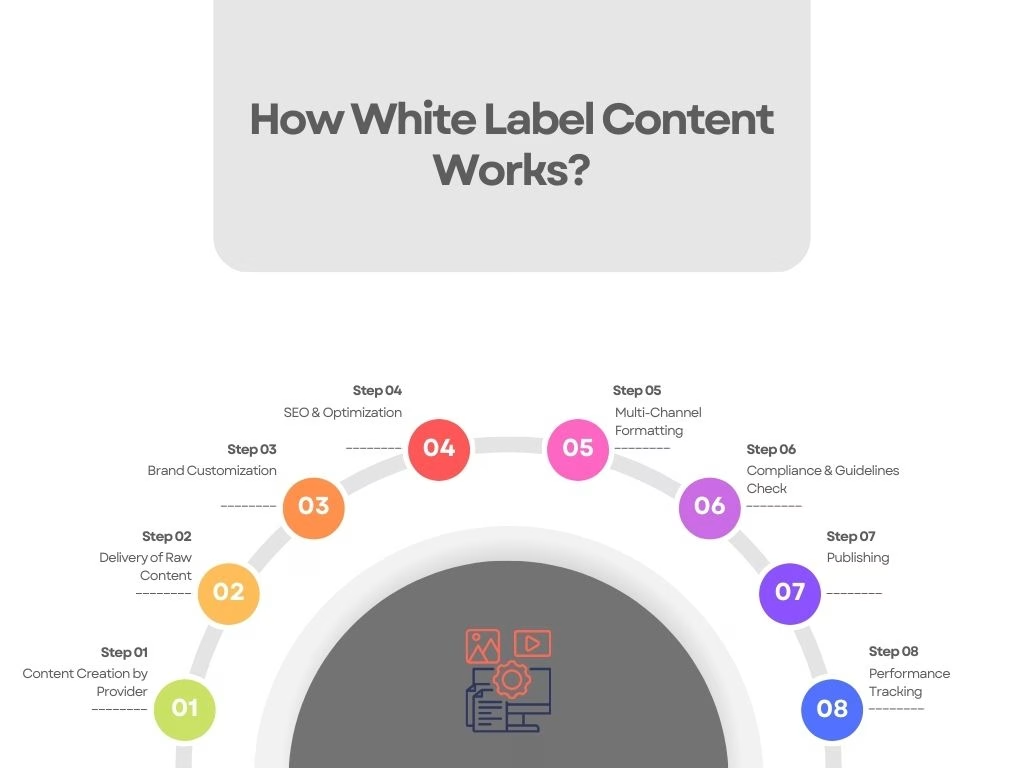
The workflow is effective in firms that desire increased content without straining resources.
Types of White-Label Content
There are numerous types of white label content. All types can help you achieve marketing objectives. Blending them makes your brand visible, helpful, and interesting. Content Marketing Institute shows digital content demand increased by 78%, driving expanded white-label solutions.
1. Articles & Blogs
Most content plans are supported by articles. White label writing: You fill out your blog with SEO-friendly posts that have been researched in a short time.
Benefits:
- Have a consistent schedule of posting.
- Establish dominance within your industry.
- Adapt easily with your voice.
As an example, a software company may purchase tech articles to educate users on best practices with its brand in the limelight.
2. E-books & Guides
E-books and manuals are rich and make you appear professional. Providers supply ready-to-use materials, which can be branded, customized with graphics, and include a call to action.
Use cases:
- Build leads using gated content.
- Provide learning materials to clients.
- Add content upgrades to blog posts.
3. Social Media Content
Social media should be posted regularly, and it may overburden small teams. White label social posts provide you with text ready to post, captions, and pictures that are up to date or timeless.
Advantages:
- Keep a steady posting rhythm
- Relate audiences to refined images.
- Liberate team time on strategy.
4. Infographics & Visuals
Pictures capture attention and make complicated concepts easier. White-labeled infographics allow you to present information, actions, or advice with your brand, which can be shared and informative.
Tips for visuals:
- Match brand colors and fonts
- Add your logo subtly
- Keep file sizes web-friendly
5. Videos & Webinars
Video viewing is on the increase, and high-quality videos may be expensive. White-labeled videos or webinars can be rebranded, subtitled, or voice-covered to fit your message.
Common uses:
- Product or service explanation.
- Train customers
- Publish brief videos on social media.
6. Email Newsletters
Email continues to be an effective medium. White-label templates and campaigns are time-saving but retain your message. Email marketing provides 4200% ROI, according to Litmus performance research across global campaigns.
Advantages:
- Ready to send campaigns
- Editable to customize the brand.
- Keep in touch without additional effort.
7. Software/SaaS Solutions
Other white label offers extend beyond content to offer tools. As an illustration, a SaaS firm may rebrand an analytics dashboard or automation tool and provide clients with additional value without developing it themselves.
Examples Across Industries
White label content is not limited to a single type of business:
- Marketing firms: provide customers with content without the need to pay full-time writers.
- SaaS businesses: educate the users through content and reduce the number of support inquiries.
- E-commerce brands: fill blogs, newsletters, and social pages to drive traffic and sales.
- Learning platforms: market-prepared courses, webinars, or manuals using their brand.
This allows companies to expand marketing at a very high rate, remain relevant, and keep the costs low without compromising quality.
Selecting the Right White Label Content Provider
Not every provider is similar one. It is important to choose one. Consider:
- Knowledge in your field: the provider should know your business and market.
- Quality and originality of content: Request samples to verify standards.
- Customization features: the content must be rebranded and voice-matched.
- Speed and consistency of delivery: consistency ensures that you are on time.
- Support and communication: A supportive provider is able to modify the content quickly.
Vetting optimizes your white-label strategy ROI. 71% prioritize expertise when selecting content partners, according to Content Marketing Institute surveys.
White Label Content Customization Tips
White-label content is yet to be touched. Here’s how to adjust it:
- Voice and tone: rephrase sections to suit your personality.
- Add visuals and brand marks: add logos, branded graphics, and signature colors.
- Revise facts and illustrations: bring them to your target audience.
- Add obvious calls-to-action: transform generic articles into lead generators.
Such measures will make the content appear as part of your team.
Measuring the Impact of White Label Content
Track metrics to show value:
- Traffic to the site: Do blog posts attract new traffic?
- Engagement: number of shares, comments, and time.
- Lead generation: number of downloads of e-books, guides, or newsletters.
- SEO: keep track of the keywords’ ranking of the rebranded material.
Periodic evaluations tell what is working and what should be changed.
Benefits of White-Label Content
Beyond saving time and budget, white-label content delivers several additional advantages that directly support long-term brand growth and marketing efficiency:
- Scalable production without burnout
When demand spikes, product launches, seasonal campaigns, or rapid audience growth occur, you can scale output instantly. No overtime, no scrambling for freelancers, and no production bottlenecks.
- Consistency across platforms
Strong brands win on consistency. White-label content ensures your blogs, emails, social posts, and visuals follow a unified structure and messaging framework every time.
- Access to specialized expertise
Top white-label content providers bring industry-level skills you may not have in-house, such as SEO strategy, data-driven writing, UX copy, or high-end design.
- Faster go-to-market execution
Instead of spending weeks writing, editing, and producing assets, you get ready-to-publish materials, shortening campaign timelines and accelerating ROI.
- Lower operational risk
Building a full internal content team is expensive and takes months. Outsourcing through white-label content reduces hiring, onboarding, and training risks.
- Improved content quality
Because providers handle content creation at scale, they typically deliver polished, research-backed assets that elevate your brand voice and reputation.
- Focus on strategy, not production
Your team can shift attention to customer insights, sales enablement, product innovation, and long-term marketing strategy, while the content engine runs in the background.
Challenges & Considerations
White label can bring risks. Search Engine Journal confirms 25–30% duplicate pages risk SEO penalties without customization.
Watch out for:
- Duplicate content: personalize to escape SEO fines.
- Voice consistency: make communication sound natural.
- Content control: Customize content to your quality.
Being ahead of such things keeps your brand strong.
Conclusion
White label content is not only a shortcut, but also a tactic of expanding marketing without overwhelming teams. Select quality suppliers, tailor content, and maintain brand continuity. Thereafter, you will be able to expand, conserve resources, and gain credibility.
Final tips for success:
- Select providers who have a niche experience.
- Edit and make it your brand voice.
- Have numerous types of content to address numerous channels.
Using these practices, white-label content becomes a foundation of your marketing approach, and your brand will develop more quickly and intelligently.
FAQs
1. What is white label content?
It is the content of a third party that can be rebranded and released by your brand.
2. What is the process of white label branding?
Providers deliver ready-to-go content; you add logos, style, and voice and send it out.
3. What is the difference between white label and private label?
A white label can be sold to numerous companies; a private label belongs to a single brand.
Yes, rebrand posts, graphics, and captions to maintain frequent interaction.
5. How to select white label content providers?
Find established experience, customization, and high-quality standards.