


Standing out online isn’t just about what you write, but how you frame it. That’s where a content angle comes in, the perspective that makes your piece click-worthy. In this article, we’ll break down what a content angle is, share real examples, and show you how to craft one that boosts SEO and grabs attention.
What is a Content Angle?
Every blog topic has been written about a thousand times. But what makes one article rise to the top while another gets ignored? The answer usually comes down to the content angle.
A content angle is the perspective, framing, or unique twist you apply to a topic. It’s how you package your content so it feels fresh and relevant, even if the subject itself is nothing new.
Think of it like storytelling. Two people can describe the same event, but one grabs your attention because of the way they frame the story. That’s exactly what a content angle does for your writing. Storytelling boosts reader engagement, retention, and emotional connection. Studies show up to 67% better recall when content is story-driven.
When you’re clear about your angle, you avoid creating generic content. Instead, your audience gets something worth clicking, reading, and sharing. And from an SEO standpoint, the right angle helps your content stand out in search results, increasing both impressions and clicks.
Types of Content Angles That Grab Attention
There’s no one-size-fits-all formula for crafting the right content angle. The key is to choose a perspective that matches your audience’s needs and your business goals. Below are some tried-and-true angles that consistently work.
1. The Educational or “How-To” Angle
People search Google to solve problems. An educational content angle gives them clear, step-by-step guidance. Google receives over 5 billion searches daily, many of which are educational in nature.
Example: Instead of just writing “Content Angle in Marketing”, frame it as “How to Find a Content Angle That Boosts Your SEO Rankings.”
This immediately tells the reader what they’ll gain and positions your article as practical and useful.
2. The Data-Driven Angle
Nothing builds authority faster than research-backed content. Statistics, studies, and real-world results make your piece stand out.
Example: “The 5 Most Effective Content Angles Backed by Case Studies.”
This type of angle appeals to readers who want facts over opinions, and it’s highly shareable.
3. The Contrarian Angle
Sometimes, the best way to get attention is to challenge assumptions. A contrarian angle questions “common wisdom” and sparks curiosity.
Example: “Why Most Content Angle Advice Hurts Your SEO (And What Actually Works).”
This style attracts readers who are tired of hearing the same recycled tips.
4. The Storytelling Angle
Humans are wired for stories. By framing your content around a personal experience or a customer’s journey, you make it relatable.
Example: “How One Startup Found the Perfect Content Angle and Tripled Their Blog Traffic.”
Readers instantly connect with real stories because they see themselves in them.
5. The Trend-Jacking Angle
Riding the wave of trending topics can skyrocket impressions. Just make sure the trend naturally ties back to your niche.
Example: “What Taylor Swift Can Teach Marketers About Content Angles.”
Unexpected comparisons like this make people curious enough to click.
6. The Emotional or Relatable Angle
Sometimes the strongest angle isn’t about teaching, it’s about empathy. This works especially well for B2C audiences.
Example: “Why Finding the Right Content Angle Feels Impossible (and How to Fix It).”
Readers feel understood, which keeps them engaged.
7. The Comparison or Listicle Angle
Comparison-based content simplifies decision-making and helps readers evaluate options.
Example: “Content Pillar vs Content Angle: What’s the Difference and Why It Matters.”
This not only clarifies confusion but also hits a high-intent keyword.
How to Find the Right Content Angle?
You now know the types of angles you can use. But the real challenge is choosing the right one for your audience and goals. A content angle that works for a startup blog might not resonate with an enterprise B2B audience. Here’s a simple framework to guide you.
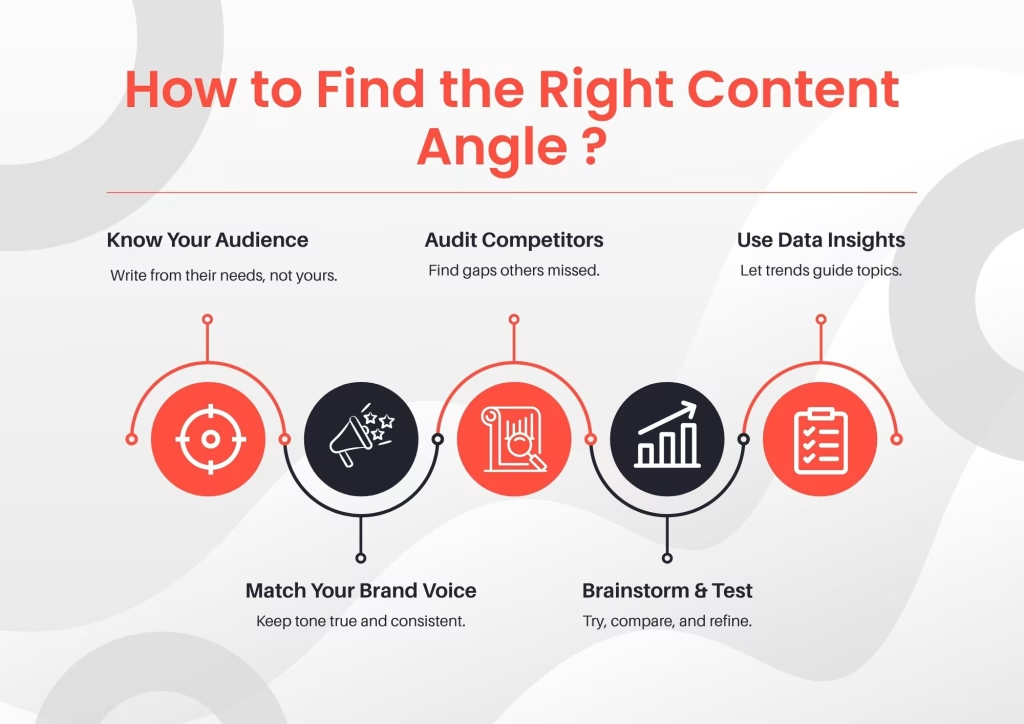
1. Start With Your Audience’s Pain Points
Every strong content angle begins with empathy. Ask yourself:
- What’s keeping my audience up at night?
- What questions are they typing into Google?
- What frustrations keep surfacing in comments, forums, or customer calls?
For instance, a marketer searching “what is content angle” doesn’t want jargon. They want a plain explanation with real-world examples. That pain point shapes the angle toward clarity and simplicity.
2. Audit Competitors and Spot Gaps
Look at the top-ranking content for your target keyword. Are they all taking the same approach? Perfect, that’s your chance to stand out.
Example: If every article on “content angle examples for SEO” lists the same 5 tips, you can add value by framing yours around real case studies or new trends.
3. Use Data to Back Your Decisions
Tools like Google Trends, Ahrefs, or SEMrush reveal which searches are gaining traction. If you see a spike in searches for “content pillar vs content angle,” that’s a signal to craft an angle around clarifying the difference.
4. Align With Your Brand Positioning
Your content angle shouldn’t just chase clicks; it should fit your voice and authority. A playful DTC brand can get away with quirky angles, while a legal services firm needs a more authoritative, fact-driven approach.
5. Brainstorm Multiple Options Before Choosing
Don’t stop at your first idea. For example, if your topic is “time management,” you might brainstorm angles like:
- “10 Time Management Hacks Backed by Neuroscience” (data-driven)
- “Why Time Management Advice Doesn’t Work for Creatives” (contrarian)
- “How I Cut My Workweek to 30 Hours Without Losing Clients” (storytelling)
Then pick the one that best fits your content goals, whether that’s SEO traffic, brand awareness, or conversions.
Content Angle Examples You Can Steal
It’s one thing to understand what a content angle is. It’s another to see how different approaches transform the same topic. Below are fresh examples that show the power of perspective.
Example Topic: “Remote Work Productivity”
- Educational: “7 Proven Ways to Stay Productive While Working From Home”
- Data-Driven: “The Remote Work Productivity Stats Every Manager Should Know in 2025”
- Contrarian: “Why Remote Work Doesn’t Kill Productivity. It Improves It”
- Storytelling: “How I Doubled My Output After Switching to Remote Work”
- Trend-Jacking: “What Elon Musk Gets Wrong About Remote Work Productivity”
Notice how each title speaks to a slightly different audience need. The core topic is identical, but the framing changes everything.
Example Topic: “Time Management”
- Data-Driven: “The Science of Time Management: Hacks Backed by Neuroscience”
- Storytelling: “How a Freelancer Cut Their Work Hours in Half With Better Time Management”
- Comparison: “Pomodoro vs. Time Blocking: Which Productivity Method Works Best?”
Each angle attracts a different intent educational for problem-solvers, storytelling for inspiration, and comparison for decision-making.
Framework for Creating Your Content Angle
Coming up with the right content angle doesn’t have to feel like guesswork. If you follow a simple framework, you can consistently shape topics into compelling pieces that rank, engage, and convert. Here’s a repeatable process:
1. Pick a Broad Topic
Start with the core idea you want to cover. This could be a keyword you’re targeting, a question from your audience, or a theme tied to your brand’s expertise.
Example: Let’s say the topic is “content angle.”
2. Define Your Audience’s Perspective
Ask yourself:
- Who am I writing for?
- What’s their current level of knowledge?
- What are they hoping to achieve by reading this?
If your readers are beginners, the angle should lean toward clarity and simplicity (“What Is a Content Angle?”). If they’re seasoned marketers, go deeper with strategy-driven content angle examples for SEO.
3. Brainstorm Multiple Angles
List at least 3–5 different approaches. Use the angle types we covered earlier as inspiration.
Example brainstorm for “content pillar vs content angle”:
- Educational: “Content Pillar vs Content Angle: The Key Differences Explained”
- Comparison: “Content Pillar vs Content Angle: Which Drives SEO Results Faster?”
- Contrarian: “Why Marketers Confuse Content Pillars and Angles (And How to Stop)”
4. Select the Angle That Matches Your Goal
Not every angle serves the same purpose. Match the angle to your objective:
- Traffic: Use SEO-rich, educational, or listicle angles.
- Engagement: Use storytelling or emotional angles.
- Authority: Use data-driven or expert-backed angles.
- Conversions: Use contrarian or problem-solving angles that highlight your product/service as the solution.
5. Validate With Research or Testing
Check whether your chosen angle fills a gap in search results. If every ranking article is identical, that’s a green light to offer a fresh take. You can also test titles on social media or email subject lines to see which angle gets the best engagement.
Best Practices for Crafting Content Angles
Great content angles aren’t complicated; they’re just intentional. Keep these quick rules in mind:
- Be specific. Narrow angles like “Content Angle Examples for SEO” beat vague ones every time.
- Stand out. Don’t copy what’s already ranking; add a contrarian, data-driven, or storytelling twist.
- Match the channel. A playful angle may shine on LinkedIn but fall flat in a whitepaper.
- Tell stories. Even in technical topics, short anecdotes make content human.
- Refresh often. Update old posts with new angles to reclaim rankings and traffic.
A strong angle is the difference between “just another blog” and content that earns clicks, shares, and trust.
Conclusion
At the end of the day, a content angle is what makes the difference between being ignored and being remembered. Anyone can write about a topic, but the way you frame it is what turns ordinary ideas into content that gets clicks, ranks in search, and builds authority.
Whether you’re clarifying content pillar vs content angle, testing new content angle examples for SEO, or reframing old posts with a sharper hook, the payoff is real. Strong angles help you rise above competitors and connect with readers on a deeper level.
If you want consistent results, treat content angles as a strategic tool, not an afterthought. With the right perspective, even the most common topic can feel fresh, valuable, and worth sharing.
FAQs
1. What is a content angle?
The content angle is the special angle or hook that you use to introduce a subject, and this is what determines how the story is to be told and how the audience is going to receive it.
2. What is the significance of the content angle?
It assists your content to be memorable, relevant, and touching to the audience, thus increasing their chances of listening, retaining, and referring to your message.
3. What are the correct content angles?
Choose an angle that fits the audience requirements, covers competitive gaps, serves business objectives, and provides a new or unexpected perspective that generates high interest.
4. Are content angles identical to headlines?
No. The underlying viewpoint is the angle, and the headline articulates that viewpoint. A single angle can stimulate various headlines and content angles.
5. Is it possible to have more than one content angle of a topic?
Yes. One subject may be treated in numerous ways, which enables various styles of storytelling to be applied that will appeal to different audiences, emotions, or information requirements.