


The creation of great content does not happen accidentally. It is the product of clear thought, good organization, and intense concentration on the reader. Brands that understand how to create great content don’t just attract traffic; they build trust and drive meaningful action.
This article dissects what makes the difference between mediocre content and content that informs and makes the reader interested, and results in conversions without being pushy.
Importance of Great Content in the Long-Term Growth
The content lies at the heart of digital marketing. It drives SEO, promotes social media, and influences the perception of your brand by people. 92% of marketers say content is a valuable business asset driving long-term ROI, with ROI averaging $2.77 per $1 spent.
The same problems are common to poor content:
- It is coded by algorithms rather than humans.
- It is purposeless and aimless.
- It passes information without affecting it.
Great content does not fall into these traps as it is purposeful, audience-oriented, and result-oriented.
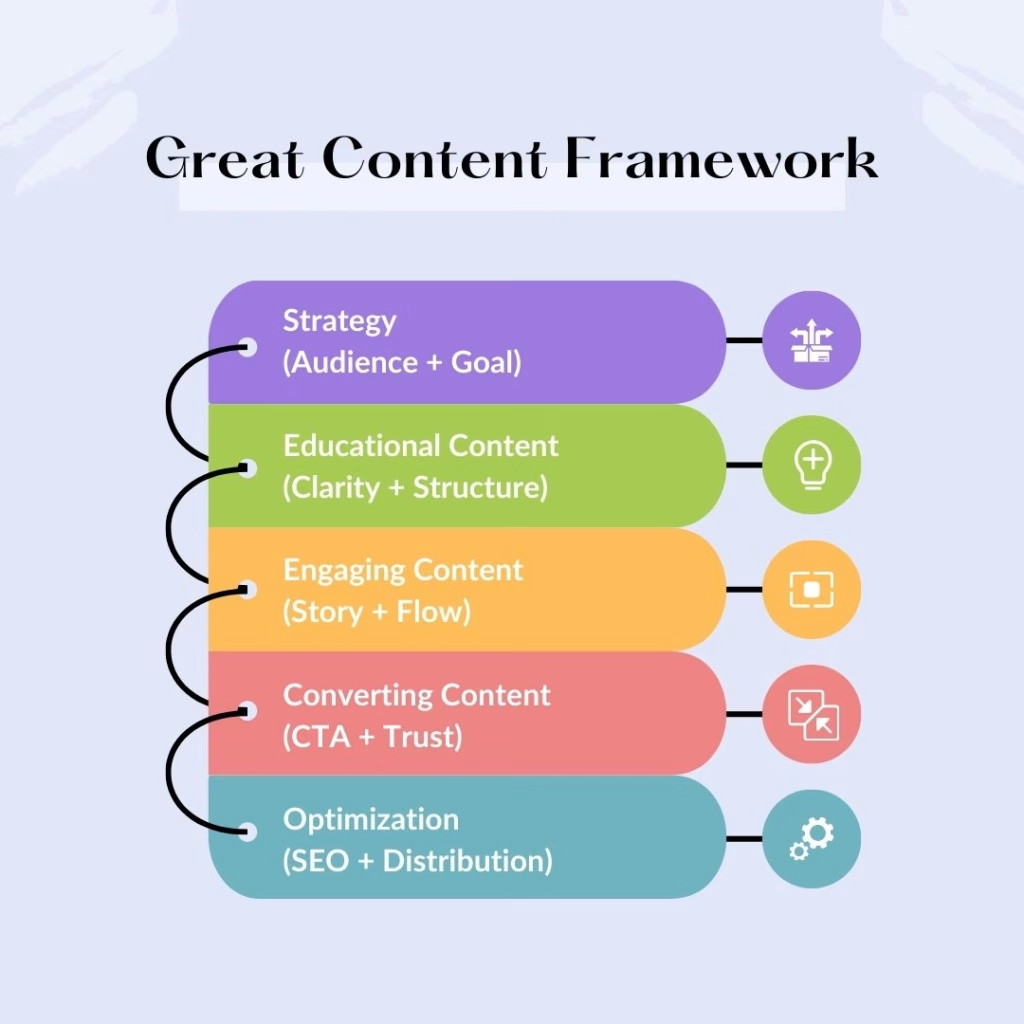
Beginning With Strategy Before You Begin Writing
Any effective piece of work begins a long time before the first sentence. Strategy provides your writing with direction and purpose.
It does not work well without even well-written content. 82% of marketers report that higher-quality content is more effective than frequent lower-quality publishing for results and engagement.
Target Your Audience Specifically
Before learning how to create great content, you need to know exactly who you’re speaking to. When one writes to everyone, no one tends to relate to it.
Consider:
- What is the issue that the reader was brought here?
- What are their objections or reservations?
- What is the outcome they are hoping for?
Tone, depth, and messaging are determined by answering these questions.
Choose One Clear Goal
Each post on a blog must have a single goal:
- Educate the reader
- Encourage engagement
- Drive a conversion
Attempting to achieve the three in equal measure dilutes the message. Determine the definition of success and then write the first sentence.
Creating Educational Content That Builds Authority
Education attracts attention when it is simple, practical, and easy to understand. Readers appreciate the content that can make them think or behave differently.
Creating educational content works best when clarity leads to every decision. 56% of respondents prefer video content for educational material, outpacing podcasts (21%) and articles (17%) in engagement.
Educate, Not Complicate
Creating educational content works best when ideas feel easy to follow. It does not imply simplifying things; it is just explaining them in a straightforward manner.
Strong educational content:
- Subdivides ideas into rational actions.
- Uses plain, direct language
- Avoids unnecessary jargon
When the readers are not left with doubts after reading, you have done it right.
Easy Reading Structure Information
Most of the readers will scan and then commit. The structure is clear and makes them go through the page.
Use:
- Descriptive subheadings
- List or step bullet points.
- Minimal paragraphs to minimize friction.
This enhances comprehension and maintains the level of attention.
Turn Knowledge into Action
Education is useful when it can be put into practice.
Support learning with:
- Practical examples
- Simple frameworks
- Immediate tips that the readers can use.
That is the way information becomes credible.
How to Create Engaging Content That Holds Attention?
Interaction does not involve fancy words. It is momentum, clarity, and relevancy. Blog posts of 1,000–2,000 words generate 56.1% more social shares than shorter content, increasing engagement signals.
Readers will remain longer and read more when they feel that they are understood.
Write Introductions That Are Time-Respectful
The first paragraph decides the retention or exodus of the readers. Bypass generalizations and move on to the point.
Effective introductions:
- Recognize a particular problem.
- Set a clear expectation.
- Promise real value
Within a few seconds, the reader is supposed to understand why the content is important to him or her.
Use Stories to Reinforce the Message
Stories are used to make the readers emotionally involved, but they must add to the lesson, not to it.
The short anecdotes are effective when they:
- Highlight common mistakes
- Share lessons learned
- Reflect real experiences
This style makes the content human and relatable.
Enhance Process and Readability
To create engaging content, writing style matters as much as insight.
Keep readers engaged by:
- Varying sentence length
- Using active voice
- Writing, not in a formal way.
The content must be as if it were a discussion with an informed guide.
How to Create Great Content That Converts Naturally?
It does not take pressure to make conversions. They are based on clarity and confidence.
It is natural to act when the readers have trust in what you have to say. Content marketing generates over 3× more leads than outbound marketing at 62% lower cost, boosting conversion efficiency.
Know What the Action Is Driven By
Conversions occur when readers are comfortable and assured. Coercion strategies tend to backfire.
High-converting content:
- Specializes in a single pain point.
- Offers a clear next step
- Removes uncertainty
When the readers perceive value, action comes automatically.
Use Clear, Relevant CTAs
The calls-to-action are most effective when they seem like a logical follow-up.
Examples include:
- Downloading a resource
- Subscribing to updates
- Requesting a consultation
CTAs should be placed after value delivery and not prior to it.
Strike a Balance Between Value and Promotion
One key principle in how to create great content is restraint. Teaching builds trust. Trust leads to conversions.
Allow experience to sell rather than hard selling.
SEO Optimization, Which Facilitates Visibility
SEO is most effective when it helps readers, rather than when it distracts them. Relevance and clearness are rewarded by search engines.
Optimized content is natural and not mechanical. 53% of marketers report increased engagement after updating existing content, emphasizing optimization over new creation alone.
Match Content and Search Intent
Relevance is rewarded by search engines. Every section should align with what users expect when searching for how to create great content.
Match intent by:
- Answering real questions
- Giving systematic descriptions.
- Avoiding fluff
This boosts rankings and satisfaction amongst users.
Use Keywords Naturally
The positioning of keywords must not be forced.
Best practices include:
- The use of the keyword in the title and introduction.
- Naturally applying it in subheadings.
- Sustaining it with related secondary keywords.
This enhances discoverability without damaging readability.
Maximize on Increased Click-Through
Success does not just involve ranking. It is equally important to get clicks.
Improve CTR by:
- Composing benefit-oriented titles.
- Staying concise and to the point with headlines.
- Not using general or generic language.
Your title must be an indicator of value.
Distribution: Make Your Content Work Harder
Half of publishing is published. Distribution is the distance that your content will go.
Smart distribution is a multiplied impact without additional writing.
Reuse Quality Content
A single, powerful blog has the ability to support several channels.
Repurpose into:
- Social media posts
- Email newsletters
- Short-form videos
- Lead magnets
This maximizes profit without additional effort.
Publish Where Your Audience Is Listening
Distribution requires an understanding of where readers spend time.
Choose platforms based on:
- Content format
- Engagement behavior
- Platform strengths
Stability is a quicker way of creating trust than quantity.
Measure Performance and Improve Over Time
The content becomes better when you consider it as an asset that is dynamic. Statistics indicate what is doing well and what should be improved.
Minor changes can provide significant returns. 69% of B2B marketers measure content success by engagement, and 67% measure by conversions, making metrics central to improvement.
Focus on Meaningful Metrics
Not every measure is a point of success.
Track:
- Time on page
- Scroll depth
- Conversion rate
- Returning visitors
These demonstrate the effectiveness of content.
Revise Rather Than Continuously Invent
It is usually faster to refresh old content than to create something new.
Improve older posts by:
- Updating examples
- Improving clarity
- Strengthening CTAs
This maintains the competitiveness and relevancy of content.
Conclusion
Understanding how to create great content comes down to intention. The content must be informative, interesting, and persuasive.
When properly executed, content will be a long-term asset that will draw the right audience and help to grow in the long term.
FAQs
1. What makes content “great” for readers and search engines?
Great content educates clearly, engages readers emotionally, aligns with search intent, and guides audiences toward meaningful actions without pressure consistently.
2. How do I start creating better content consistently?
Start by understanding your audience, defining one clear goal, structuring information logically, and writing in a natural, conversational tone consistently.
3. Why is SEO important when creating content?
SEO content performs better when keywords are used naturally, intent is matched precisely, formatting is clean, and value is prioritized.
4. What helps keep readers engaged throughout a blog post?
Engaging content uses clear structure, relatable examples, short paragraphs, active voice, and smooth transitions to maintain reader attention consistently and effectively.
5. How do I improve conversions with content?
Strong calls-to-action appear after value delivery, match reader intent, reduce friction, and clearly explain the next step for better conversions.