

Cisco isn’t just a networking company; it’s a global brand trusted by businesses, governments, and institutions to power digital transformation. Staying relevant in such a fast-moving industry takes more than innovative products. It requires a sharp marketing strategy that connects complex technology to real customer value.
This Cisco case study explores how the company positions itself in competitive markets, tailors campaigns to diverse industries, and leverages partners to expand its reach. The Cisco marketing strategy isn’t about pushing products; it’s about building trust, driving adoption, and reinforcing Cisco’s role as a long-term technology leader.
We’ll walk through Cisco’s background, marketing mix, target market insights, and SWOT analysis to uncover lessons any business can apply.
Company Background
Cisco Systems, Inc. was founded in 1984 by a group of Stanford University computer scientists who wanted to simplify communication across networks. What started with a single multiprotocol router quickly turned into a revolution in how organizations connect, share, and scale their digital infrastructure.
Today, Cisco is a global technology leader headquartered in San Jose, California, with operations in more than 100 countries. The company’s portfolio spans networking hardware, cybersecurity, cloud solutions, and collaboration platforms like Webex. With over 80,000 employees and billions in annual revenue, Cisco continues to influence how the digital economy evolves.
But numbers alone don’t explain Cisco’s staying power. Its success is tied to a clear Cisco marketing strategy and a marketing approach that positions Cisco not just as a vendor, but as a trusted partner. That reputation has helped Cisco maintain strong customer loyalty while adapting to new technologies and market demands.
Cisco Marketing Strategy
Cisco’s marketing strategy focuses on selling solutions, not just products. The brand positions itself as a trusted partner that helps organizations handle digital transformation with confidence.
Thought leadership plays a big role; Cisco publishes industry research, shares insights, and hosts global events like Cisco Live to connect with IT leaders. These efforts reinforce its reputation as an innovator.
On the digital front, Cisco uses account-based marketing, webinars, and social media to reach decision-makers. Instead of highlighting specs, campaigns focus on outcomes like security, scalability, and efficiency.
Cisco also leans heavily on its partner ecosystem. By co-marketing with resellers and integrators, it extends its reach worldwide while strengthening credibility across multiple industries.
Target Market Analysis
Cisco’s target market is primarily business-to-business (B2B), with customers ranging from small and mid-sized firms to global enterprises and governments. Its solutions appeal most to organizations that rely on secure, scalable, and reliable IT infrastructure.
Key industries include:
- Healthcare – securing patient data and enabling telehealth.
- Finance – protecting transactions and maintaining uptime.
- Education – powering remote learning and campus networks.
- Telecommunications & IT – delivering faster, more resilient connectivity.
Cisco’s typical buyer personas are CIOs, IT managers, and network administrators—decision-makers who prioritize stability and long-term value.
By focusing on these segments, Cisco tailors its messaging around outcomes like security, collaboration, and digital resilience. This clarity helps the company stand out in a crowded market where rivals such as Huawei, Juniper, and HP Enterprise compete for attention.
Marketing Mix (4Ps)
Cisco’s marketing mix demonstrates how the company uses its products, pricing, distribution, and promotional activities to maintain leadership in the global tech market. Every element works together to position Cisco not just as a vendor, but as a partner businesses can rely on.
Product
Cisco delivers a broad portfolio that includes networking hardware, advanced cybersecurity solutions, cloud-based services, and collaboration tools such as Webex. Instead of promoting standalone products, Cisco focuses on integrated solutions. These systems are designed to deliver real business outcomes – greater efficiency, stronger security, and seamless collaboration. This “solutions-first” approach helps the brand stand apart from competitors who focus mainly on hardware.
Price
The company follows a value-based pricing model. While Cisco solutions often carry a premium, customers view the cost as justified because of reliability, innovation, and long-term value. Enterprise packages, flexible licensing, and discounts for partners allow Cisco to serve a wide range of customer segments without diluting its premium brand image.
Place (Distribution)
Cisco’s global presence is powered by its partner ecosystem. Distributors, resellers, and system integrators extend Cisco’s reach into local markets worldwide. Direct sales to large enterprises and strong online platforms complement this partner-led distribution, ensuring customers can access solutions wherever they are.
Promotion
Marketing promotions focus on building trust and education. Cisco hosts major events like Cisco Live, runs digital campaigns, webinars, and shares customer success stories. Co-marketing with partners amplifies visibility, while thought leadership content reinforces Cisco’s expertise.
Together, these four elements strengthen Cisco’s market dominance and reinforce its reputation as a premium, reliable, and customer-centric brand.
Cisco SWOT Analysis
A Cisco case study solution isn’t complete without looking at its strengths, weaknesses, opportunities, and threats. This snapshot highlights how Cisco stays competitive while facing industry pressures.
Strengths
- Strong global brand with a trusted reputation
- Wide product portfolio across networking, cloud, and security
- Vast partner ecosystem driving reach and sales
- Consistent investment in R&D and innovation
Weaknesses
- Premium pricing limits reach in cost-sensitive markets
- Heavy reliance on hardware despite growth in software and services
- Complex portfolio can overwhelm smaller customers
Opportunities
- Rising demand for cloud networking and cybersecurity
- Expansion into AI-driven networking and 5G technologies
- Growth in hybrid work solutions like Webex
- Increasing digital transformation in emerging markets
Threats
- Fierce competition from Huawei, Juniper, Arista, and HP Enterprise
- Economic slowdowns are affecting IT budgets
- Rapid tech shifts that require constant adaptation
- Geopolitical factors impacting global operations
This SWOT analysis shows why Cisco’s marketing strategy emphasizes trust, innovation, and global reach.
Branding and Positioning
Branding and positioning play a central role in the Cisco marketing strategy. While products and pricing matter, it’s Cisco’s ability to shape perception and build trust that keeps the brand ahead of competitors. This section looks at how Cisco defines its identity, communicates value, and maintains global recognition.
Building Trust Through Branding
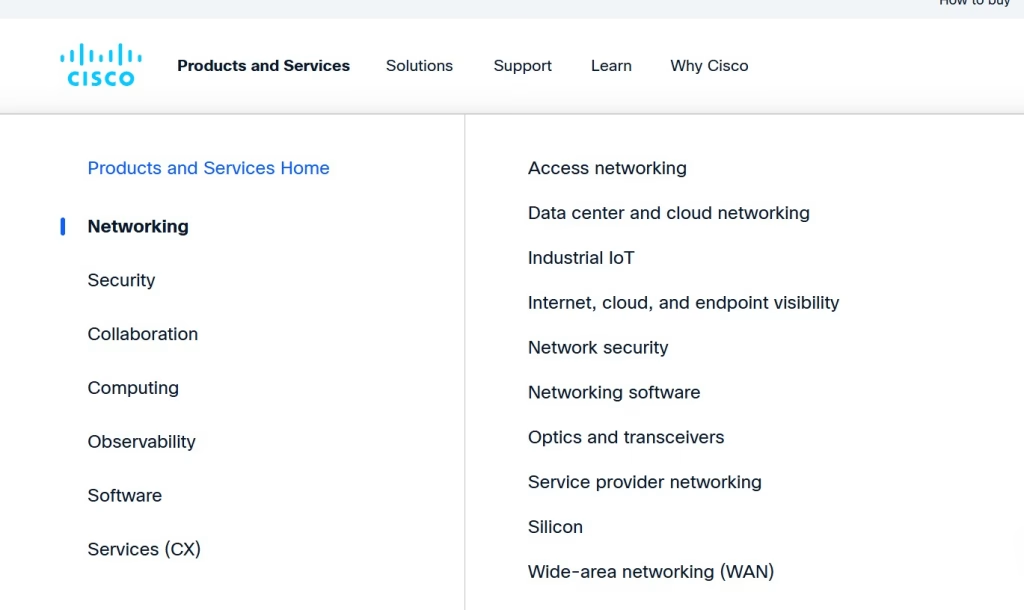
Cisco’s brand identity is rooted in trust and innovation. Instead of being seen only as a networking hardware provider, Cisco positions itself as a complete solutions partner. This branding strategy helps the company stand out in a crowded tech market where many competitors focus solely on selling devices.
Core Positioning Message
Cisco emphasizes values like security, reliability, and scalability in its messaging. The positioning is clear: Cisco is the backbone of modern digital infrastructure. By focusing on outcomes – safer networks, future-ready systems, and resilient operations, Cisco reassures CIOs and IT leaders that choosing its solutions reduces risk while delivering long-term value.
Thought Leadership as a Branding Tool
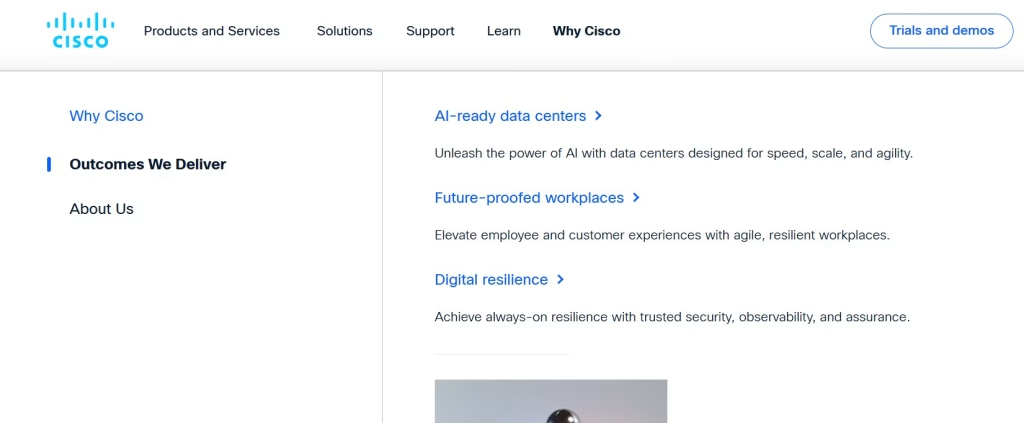
Cisco invests heavily in thought leadership to strengthen its positioning. Events like Cisco Live, along with research papers and industry insights, present Cisco as a guide for navigating digital transformation. This not only boosts credibility but also deepens relationships with enterprise customers.
Consistency in Visual Identity
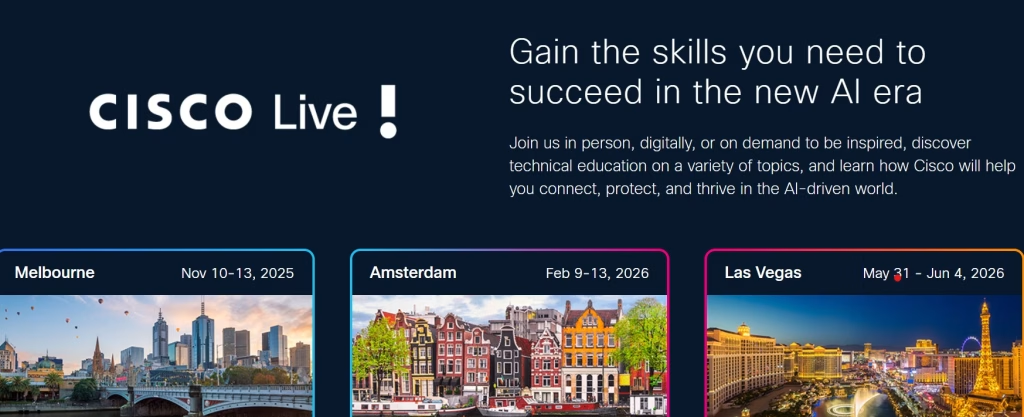
The brand is reinforced through consistent use of its logo, the “Bridge to Possible” tagline, and a clean, professional design language. These elements make Cisco instantly recognizable across global markets.
By combining technical authority with approachable branding, Cisco successfully positions itself as both innovative and dependable, a key strength of Cisco marketing strategy.
Conclusion
Cisco’s success story is built on more than cutting-edge technology; it’s powered by a marketing strategy that keeps the brand relevant, trusted, and future-focused. By positioning itself as a solutions provider rather than just a hardware vendor, Cisco has earned loyalty across industries that rely on reliable and secure IT infrastructure.
From its carefully defined target markets to a marketing mix that balances premium pricing with global reach, Cisco consistently reinforces its leadership. The SWOT analysis shows both challenges and opportunities, but it also highlights why Cisco continues to thrive: innovation, trust, and a partner-first mindset.
For marketers, the Cisco case study offers clear lessons focused on solving problems, building credibility through thought leadership, and scaling with the right partners. That’s the essence of the Cisco marketing strategy and the reason it remains a benchmark for B2B marketing worldwide.
FAQs
1. What is Cisco’s approach to content marketing?
Cisco emphasizes a solutions-first content strategy, focusing on delivering measurable outcomes like efficiency, security, and collaboration. This approach aims to educate decision-makers rather than merely promote products.
2. Why is thought leadership important in the Cisco marketing strategy?
Thought leadership allows Cisco to shape industry conversations. By publishing reports, hosting webinars, and sharing expert insights, Cisco strengthens credibility with IT leaders and decision-makers.
3. Where can I find Cisco’s latest webinars and events?
Cisco hosts regular events like Cisco Live, which are accessible through their official website and provide valuable insights into their products and strategies.
4. How does Cisco marketing strategy support its business growth?
Cisco marketing strategy aligns with its business goals by promoting long-term value, driving customer loyalty, and expanding into high-growth areas like cybersecurity, cloud, and AI-driven networking.
5. How does Cisco utilize search intent in its marketing?
Cisco employs intent-based marketing by creating content that addresses specific user needs at various stages of the buyer’s journey, from awareness to decision-making.