


A case study is more than just a story about a project or client. It’s a detailed exploration of a real-life scenario that highlights challenges, solutions, and measurable results. Whether you’re in marketing, business, or research, learning how to write a case study is a powerful way to demonstrate expertise and credibility.
Case studies help readers see how problems were solved, offering insights they can apply in similar situations. 73% of successful content marketers incorporate case studies into their strategies, indicating their importance in effective marketing. They combine storytelling with data, creating a compelling narrative that connects with audiences.
By the end of this article, you’ll understand the purpose of a case study, the properly write a case study format, and actionable tips to create one that engages and converts.
What Is a Case Study and Its Purpose?
Before diving into writing a case study, it’s important to define what is a case study?
A case study is a structured analysis of a person, group, organization, or situation. It documents challenges, marketing strategies, and outcomes in a way that highlights problem-solving skills and effectiveness.
Purpose of Writing a Case Study
- Show results: Demonstrate how solutions delivered tangible benefits.
- Educate audiences: Teach readers strategies, approaches, and lessons learned.
- Build credibility: Strengthen your authority in your field or industry.
- Support marketing efforts: Convince prospects through real examples of success.
Think of a case study as both proof and storytelling; it proves your work produces results while telling a story that readers can relate to.
Planning Your Case Study
Writing a case study starts long before the first word hits the page. Proper planning ensures your story is clear, compelling, and actionable. Companies with written business plans experience 30% faster growth compared to those without.
1. Identify the Objective
Ask yourself: Why are you writing a case study?
Are you aiming to:
- Showcase a product or service success
- Highlight problem-solving strategies
- Share insights for academic or research purposes
Defining the objective keeps the narrative focused and ensures your case study resonates with the right audience.
2. Choose the Subject
Your subject could be:
- A client or customer
- A team project
- A research experiment
Select a case that clearly demonstrates a problem, solution, and measurable results. The more relatable and specific, the better your readers can connect.
3. Gather Information
Strong case studies are built on solid data. Collect:
- Metrics and statistics
- Interviews or quotes
- Contextual details about the situation
- Challenges faced and strategies implemented
Accurate data not only boosts credibility but also strengthens the story you’re telling.
4. Decide on the Type
There are different types of case studies:
- Exploratory: Investigates new ideas or hypotheses
- Explanatory: Explains causes and effects of a problem
- Descriptive: Details a situation or project without deep analysis
- Intrinsic: Focused on a unique subject for learning purposes
Choosing the type helps you determine the depth of analysis and storytelling style.
With planning complete, you’re ready to move into writing a case study format, which ensures your content is structured and readable.
Writing a Case Study Format: Step-by-Step Structure
A well-organized case study is easier to read, more persuasive, and SEO-friendly. Knowing what is the format of case study helps you present information logically while keeping readers engaged.
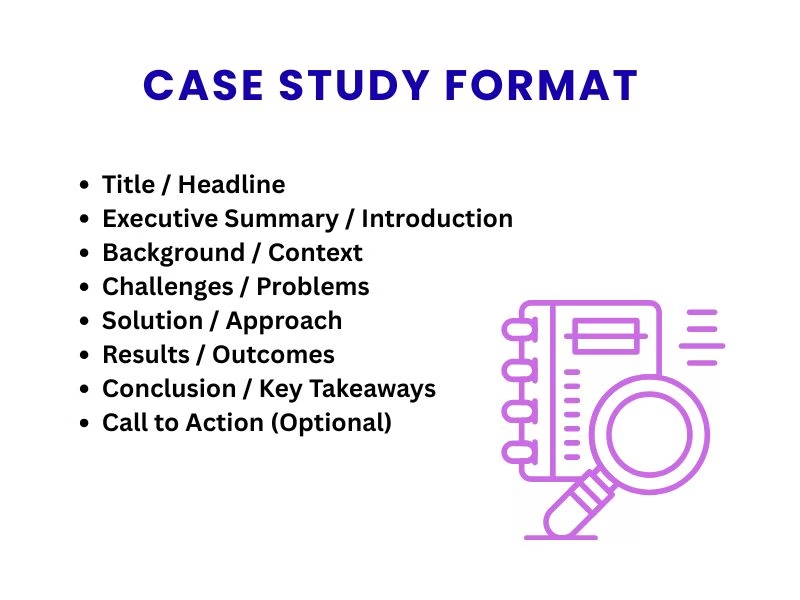
1. Title / Headline
Your title should be clear, concise, and attention-grabbing. Include the focus keyphrase “write a case study” to boost SEO.
Example: “How to Write a Case Study That Boosts Conversions”
2. Executive Summary / Introduction
Provide a brief overview:
- Who or what the case is about
- The key challenge faced
- The outcome or results achieved
Keep it short, think of it as a teaser that encourages readers to continue.
3. Background / Context
Set the scene:
- Introduce the company, project, or situation
- Explain relevant history or circumstances
- Provide context for why the challenge mattered
This section ensures readers understand the environment before diving into details.
4. Challenges / Problems
Clearly describe the problems or obstacles encountered:
- Highlight the main pain points
- Explain why these challenges were significant
- Use real examples or quotes where possible
Framing the challenges effectively makes the solution and results more impactful.
5. Solution / Approach
Explain how the problem was addressed:
- Outline strategies and actions taken
- Detail tools, processes, or methods used
- Emphasize innovative or effective approaches
This is the heart of writing a case study; demonstrate problem-solving in action.
6. Results / Outcomes
Present measurable outcomes:
- Metrics, numbers, or KPIs that reflect success
- Benefits realized by the client, team, or project
- Comparisons to prior results, if applicable
Visuals like charts, graphs, or screenshots can make results clearer and more persuasive. An MIT study found that our brains can process images we’ve seen for as few as 13 milliseconds, enabling faster decision-making.
7. Conclusion / Key Takeaways
Wrap up the case study by summarizing:
- Main lessons learned
- Practical insights for readers
- Any next steps or recommendations
8. Call to Action (Optional)
Encourage readers to:
- Contact you for services
- Download additional resources
- Read related case studies
CTA section converts engagement into leads, making your case study not just informative but actionable.
Tips for Writing a Case Study
A strong case study combines clear data with compelling storytelling.

Here are actionable tips to make your case study engaging, credible, and shareable:
1. Tell a Story
Even though case studies rely on facts, presenting them as a narrative makes readers care. Follow a simple story structure:
- Characters: Introduce the client, team, or project.
- Conflict: Explain the challenge or problem faced.
- Resolution: Show how the solution produced results.
Storytelling makes your case study relatable and memorable.
2. Include Concrete Data
Numbers add credibility. Use metrics to showcase success:
- Quantitative results like percentage increases, revenue growth, or efficiency improvements.
- Qualitative outcomes such as customer satisfaction or positive feedback.
Balancing data with narrative builds trust with readers.
3. Add Quotes or Testimonials
Direct quotes from clients, stakeholders, or team members give authenticity. Research indicates that 72% of consumers say positive testimonials increase their trust in a business, emphasizing the significance of authentic client feedback. They show real people who experienced the challenge and benefited from your solution.
4. Keep It Simple and Readable
Short paragraphs, plain language, and bullet points make your case study easy to follow. Avoid unnecessary jargon unless your audience expects it.
5. Use Visuals
Charts, graphs, screenshots, or images illustrate key points faster than text alone. Visuals also break up long sections, keeping readers engaged.
6. Optimize for SEO
Naturally, sprinkle your focus key phrase “how to write a case study” and related keywords like “writing a case study format”. Use clear subheadings and meta descriptions to improve visibility on Google. Since most users read only about 20% of the text, well-structured headings and subheadings are crucial for retaining their attention.
Following these tips ensures your case study is not just informative but also persuasive, engaging, and professional.
Examples and Templates for Writing a Case Study
Seeing a case study in action can make the process much easier. Using examples or templates gives you a clear framework to follow when crafting your own.
Example 1: Marketing Case Study
Title: How Company X Increased Sales by 40% in 6 Months
- Background: Company X struggled with low online engagement.
- Challenge: Their email campaigns had poor open rates and lead conversions.
- Solution: Implemented personalized email automation and targeted ads.
- Results: Open rates increased by 35%, conversions rose by 40%, and revenue grew significantly.
- Key Takeaway: Personalization and targeted strategies can dramatically improve marketing outcomes.
Example 2: Product Development Case Study
Title: How Product Y Improved User Retention by 25%
- Background: Product Y had high churn in the first month after onboarding.
- Challenge: Users found the interface confusing and onboarding unclear.
- Solution: Redesigned onboarding experience and simplified the interface.
- Results: Retention improved by 25%, user satisfaction scores increased, and support requests decreased.
- Key Takeaway: Small UX improvements can have a major impact on user retention.
Template for Writing a Case Study
- Title: [Attention-grabbing title with focus keyphrase]
- Executive Summary: [Brief overview of the case]
- Background / Context: [Introduce the subject and situation]
- Challenges: [Outline the main problems or pain points]
- Solution / Approach: [Describe strategies and actions taken]
- Results / Outcomes: [Provide measurable results, statistics, or qualitative feedback]
- Conclusion / Key Takeaways: [Summarize insights and practical lessons]
- Call to Action (Optional): [Invite readers to act, contact, or explore further]
Templates and examples like these simplify the process and ensure your case study stays organized, readable, and effective.
Conclusion
A strong case study turns real results into a compelling story that builds credibility and inspires action. Follow a clear writing a case study format background, challenges, solutions, and outcomes and naturally include your focus keyphrase “how to write a case study”.
With a concise, well-structured case study, you can showcase achievements, educate readers, and leave a lasting impression.
FAQs
1. How do case studies help a business grow?
Case studies showcase real results and solutions, building credibility with prospects and demonstrating your ability to solve problems, leading to higher conversions and client trust.
2. Why are case studies considered effective marketing tools?
They provide in-depth, relatable examples of success, educate potential clients, and act as proof that your products or services deliver tangible results.
3. Are testimonials better than case studies?
While testimonials provide short, positive endorsements, case studies go deeper by showing the full story: challenges, solutions, and measurable outcomes, making them more persuasive for business decisions.
4. How can case studies influence buyer decisions?
By illustrating problem-solving strategies and results, case studies give prospects confidence that your business can address similar challenges, reducing hesitation and increasing trust.
5. Can small businesses benefit from case studies?
Yes, even small businesses can use case studies to showcase successful client projects, highlight expertise, and compete with larger companies by demonstrating real-world value.