
Think of a lemonade stand where you only pay a fee when someone actually takes a sip of your lemonade. Fair deal, right? That’s exactly how pay per click advertising works in the online space.
PPC, short for pay-per-click, is a go-to method businesses use to attract customers. From small startups to global brands, it works because it delivers quick results without draining the entire budget upfront. Businesses utilizing PPC advertising, particularly through platforms like Google Ads, have reported an average return of $2 for every $1 spent, indicating a 200% ROI.
The concept sounds simple: you pay only when someone clicks on your ad. But beneath that simplicity lies smart strategy, creative planning, and huge opportunities for growth.
This guide breaks down PPC advertising explained in clear terms, shares a practical pay per click advertising strategy, highlights the advantages, and ends with actionable PPC advertising tips that anyone can apply.
The first step is understanding how PPC advertising really works, so let’s start there.
PPC Advertising Explained
Pay per click advertising explained in simple words: it’s a system where businesses pay only when someone clicks on their ad. Think of it as renting a billboard that charges you only when a passerby stops to check it out. That way, your money goes toward actual interest, not just empty views.
The most popular platforms for PPC are Google Ads, Bing Ads, and social media marketing sites like Facebook, Instagram, and LinkedIn. Google, Facebook, Instagram, Bing (Microsoft), and LinkedIn are the top PPC platforms used by 98%, 76%, 70%, 67%, and 48% of professionals respectively. These platforms run auctions behind the scenes. Advertisers bid on keywords or audience interests, and the winner’s ad gets shown to people most likely to care.
PPC ads don’t just show up in search results. They also appear as display banners on websites, video ads on YouTube, and sponsored posts on social feeds. This variety means your brand can reach customers at different stages, whether they’re just browsing or ready to buy.
The beauty of PPC is precision. Instead of shouting into a crowd, you can target a specific audience based on what they search, where they live, or even what they’ve been shopping for recently. That kind of control is why businesses of all sizes rely on PPC to grow.
Now that you know what PPC is and how it works, the next step is understanding the backbone: a strong pay per click advertising strategy.
What is Pay Per Click Advertising Strategy?
A strong pay per click advertising strategy keeps you from wasting money on random clicks. With a plan, every ad leads to a real chance of winning a customer.
Start by setting clear goals; traffic, leads, or sales. Then choose high-intent keywords that show buying intent, like “order pizza online” instead of “pizza ideas.”
Targeting is key. Focus on location, age, or interests so your ads reach the right people. Pair that with a landing page that matches the ad promise to avoid losing clicks.
Finally, test and adjust. A good content strategy means tracking results, improving ad copy, and fine-tuning your budget for the best return. Dedicated PPC landing pages outperform generic site pages, driving a 65% higher conversion rate.
Now that the strategy is clear, let’s look at the biggest pay per click advertising advantages.
Advantages of PPC Digital Advertising
The real charm of PPC is how quickly it delivers results while giving you full control. Here are the key pay per click advertising advantages:
- Instant results – Campaigns can start driving traffic and sales the moment ads go live.
- Budget control – You choose how much to spend daily or monthly, with no surprises.
- Measurable performance – Every click, impression, and conversion is trackable.
- Precise targeting – Reach people by keyword, location, age, interests, or behaviors.
- Remarketing power – Re-engage visitors who showed interest but didn’t convert.
- Works with SEO – PPC gives quick wins, while SEO builds long-term traffic.
With these advantages in mind, the next step is understanding the most effective PPC digital advertising strategies to put them into action.
PPC Digital Advertising Strategies
Having the right strategy can turn clicks into customers and wasted spend into profit. Below are some tried-and-true PPC digital advertising strategies that keep campaigns effective and efficient.
Smart Keyword Research
Keyword research is the backbone of PPC. The goal is to find high-intent terms that buyers use when they’re ready to take action. Along with choosing the right phrases, it’s equally important to add negative keywords to block irrelevant clicks and save budget.
Compelling Ad Copy
Your ad text should grab attention fast. Use clear benefits, highlight offers, and include a strong call-to-action like “Shop Now” or “Get Free Quote.” Adding a clear CTA (“Shop Now,” “Get Free Quote,” etc.) can increase CTR by 2.8%, reinforcing the importance of explicit direction.
Optimized Landing Pages
Clicks mean nothing if the landing page doesn’t deliver. Match the ad promise with the page content, keep it simple, and guide visitors toward one clear action.
Use of Ad Extensions
Ad extensions make your ads stand out by showing extra info like phone numbers, links to key pages, or customer reviews. More details often mean higher click-through rates.
Continuous Testing
Great campaigns are never set and forgotten. Test headlines, visuals, and calls-to-action. Small tweaks often bring big improvements in conversions.
Remarketing Campaigns
Not every visitor buys the first time. Remarketing helps bring them back with tailored ads, reminding them of what they viewed earlier. For example, Adidas marketing strategies include AI-powered retargeting, showing users relevant products based on browsing behavior to boost engagement and drive repeat purchases.
With these PPC digital advertising strategies, you set the stage for success. Next, we’ll wrap things up with practical PPC advertising tips you can start using right away.
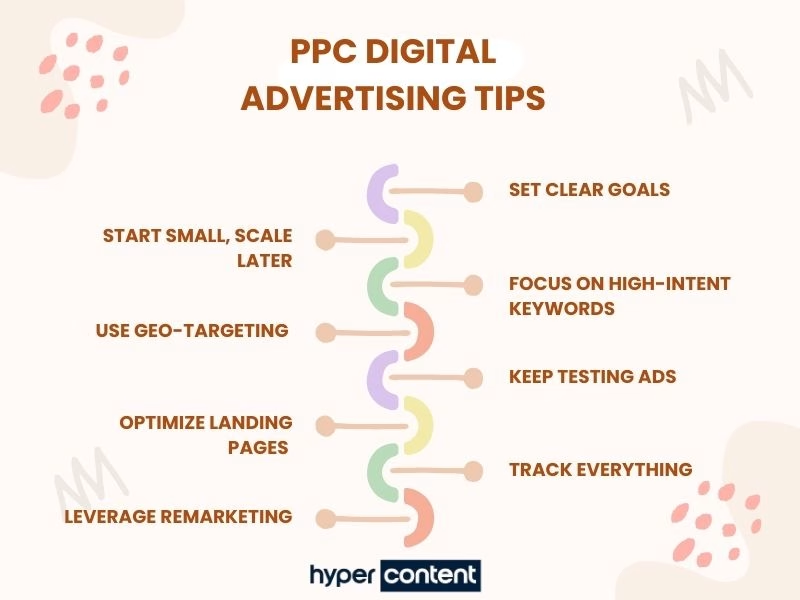
PPC Digital Advertising Tips
Running PPC campaigns is easier when you follow a few simple best practices. These PPC advertising tips can help you save money and boost results at the same time:
- Set clear goals – Know if you want traffic, leads, or direct sales before starting.
- Start small, scale later – Test with a modest budget, then increase spending once you see what works.
- Focus on high-intent keywords – Go after terms that signal buyers, not just browsers.
- Use geo-targeting – Show ads only in locations that matter to your business.
- Keep testing ads – Run A/B tests on headlines, copy, and calls-to-action.
- Optimize landing pages – Make sure pages are fast, mobile-friendly, and match ad promises.
- Track everything – Use analytics to measure clicks, conversions, and cost-per-sale.
- Leverage remarketing – Remind past visitors to come back and complete their purchase. Remarketing campaigns can yield conversion rate increases of over 1000% an unbelievable edge by re-engaging users who’ve already shown interest.
These tips give you a practical edge. To bring everything together, let’s close with a quick conclusion on why PPC should be part of every smart marketing plan.
Conclusion
Pay per click advertising may look simple on the surface, but with the right strategy, it becomes one of the most powerful tools in digital marketing. From quick results and precise targeting to measurable performance, the advantages make it hard to ignore.
A strong pay per click advertising strategy, combined with smart PPC digital advertising and solid customer research, ensures your budget turns into real customers instead of wasted clicks. And with the right PPC advertising tips, you can keep improving and stay ahead of competitors.
Think of PPC as a balance of art and data. The art lies in writing ads that connect, while the data shows you where to adjust for better results. When both work together, PPC doesn’t just bring clicks, it brings growth.
In the end, PPC is less about spending money and more about investing wisely to reach the right people at the right time.
FAQs
1. What is PPC digital advertising?
It’s a paid online marketing model where businesses pay each time their ad is clicked.
2. Why should businesses invest in PPC campaigns?
PPC delivers fast results, targeted traffic, and measurable ROI.
3. Which platforms are best for PPC advertising?
Google Ads, Bing Ads, Facebook, LinkedIn, and Instagram are widely used.
4. How can I reduce PPC advertising costs?
By improving ad quality, targeting the right keywords, and optimizing landing pages.
5. Can PPC campaigns help small businesses grow?
Yes, they provide affordable visibility and attract potential customers quickly.